

This short story of a successful model of inland fisheries governance is based on my talk at the 14th Asian Fisheries and Aquaculture Forum, and highlights the achievements of Bihar’s fisher cooperatives in sustainable fisheries and fisheries livelihoods in a historical perspective.
Vipul Singh
Inland fisheries are an important part of the economy and food system of India. But fisheries are not only about fish production. They are also about access to water, rights over resources, livelihoods and the institutions through which these resources are governed. This becomes particularly important in Bihar. The state has an extensive network of rivers, wetlands, mauns, chaurs, oxbow lakes, ponds and tanks. Many of these water bodies are connected to the seasonal rhythms of the Ganga and its tributaries. They support fishing communities whose livelihoods have been closely connected with these waters for generations.
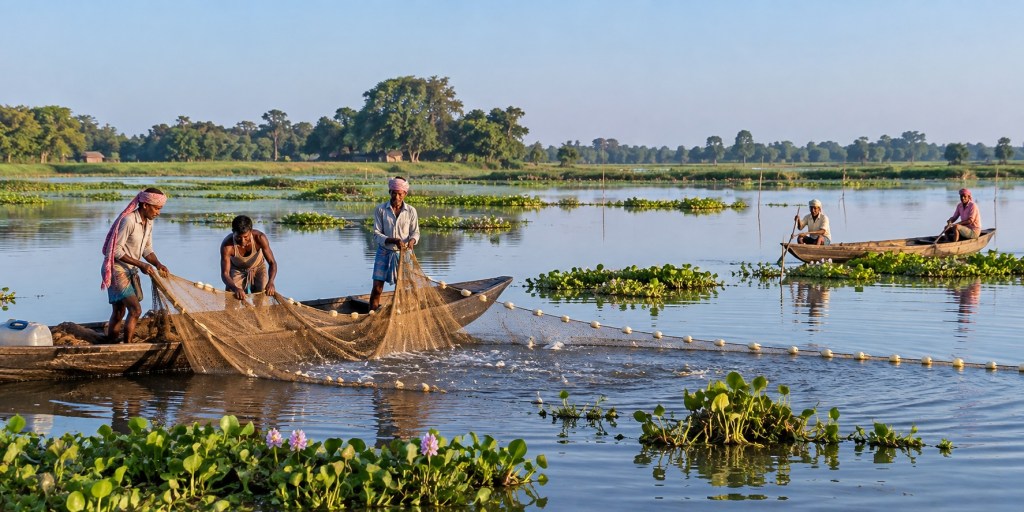
Photo 1: Fishers in Bihar Wetland
Bihar provides an interesting case for thinking about a larger question. What kind of governance system can make inland fisheries productive while also securing the livelihoods of the communities that depend upon them? My interest in this question comes partly from the history of fisheries in the middle Ganga basin. The colonial period saw a gradual transformation of customary fishing rights and the increasing treatment of fisheries as resources that could be regulated, leased and taxed. The experience of the nineteenth century provides an important background to understanding the governance arrangements that exist in Bihar today.
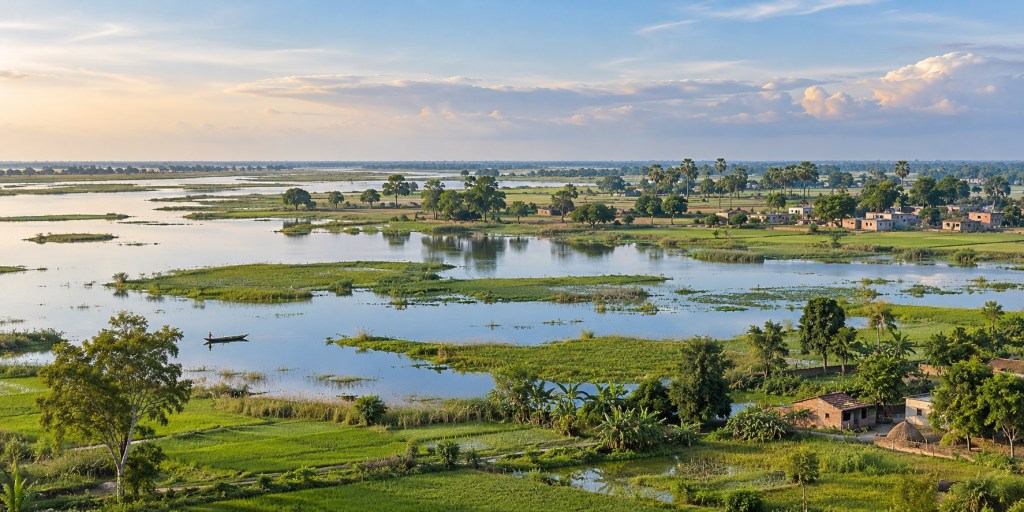
PHOTO 2: Photograph of a Ganga floodplain in Bihar
From Customary Rights to Regulated Fisheries
The middle Ganga basin is an ecologically distinctive landscape. Rivers frequently change their courses, depositing sediment in one place and eroding land elsewhere. The diara landscape is a particularly good example. New islands and sandbars are formed while older land is gradually washed away. For communities living in these areas, cultivation was uncertain and seasonal, and fishing consequently became an important source of livelihood.
Before colonial rule, fishing was largely governed through customary practices. This did not mean that there were no rules governing access. Rather, rights were embedded in local social institutions and long-established practices. The colonial state gradually introduced a different approach. Following the acquisition of diwani in 1765, the East India Company began redefining many traditional rights over rivers, ponds and wetlands. By the nineteenth century, fisheries were increasingly viewed as a potential source of revenue. Fishing rights came to be leased and, in many areas, were incorporated into systems of property and revenue collection.
The Bengal Private Protection Fisheries Act of 1889 and the Inland Fisheries Act of 1897 were important stages in this transformation. Conservation of fish was one of the arguments used to justify greater regulation, but the new legislation also restricted customary access to fisheries. Fishing rights increasingly became something that could be legally defined, transferred and leased.
The consequences for fishing communities were considerable. The person who actually caught the fish increasingly did not control the fishery. Fishing rights could be leased to contractors or other intermediaries, who could then employ traditional fishermen as wage labourers or share-catch workers. This history is important because it left behind a basic institutional problem: the communities that possessed the knowledge and skills to use the resource were often separated from the rights to manage it. The contemporary governance of inland fisheries in Bihar has to be understood against this background.
The Bihar model
The Bihar model came into operation after 2006. It advocates for community-led management, legal protections for public access, and cooperative resource as a sustainable alternative. This model prioritises ecological sustainability, equitable resource distribution, and the preservation of fishers’ cultural heritage tied to riverine waterscapes.
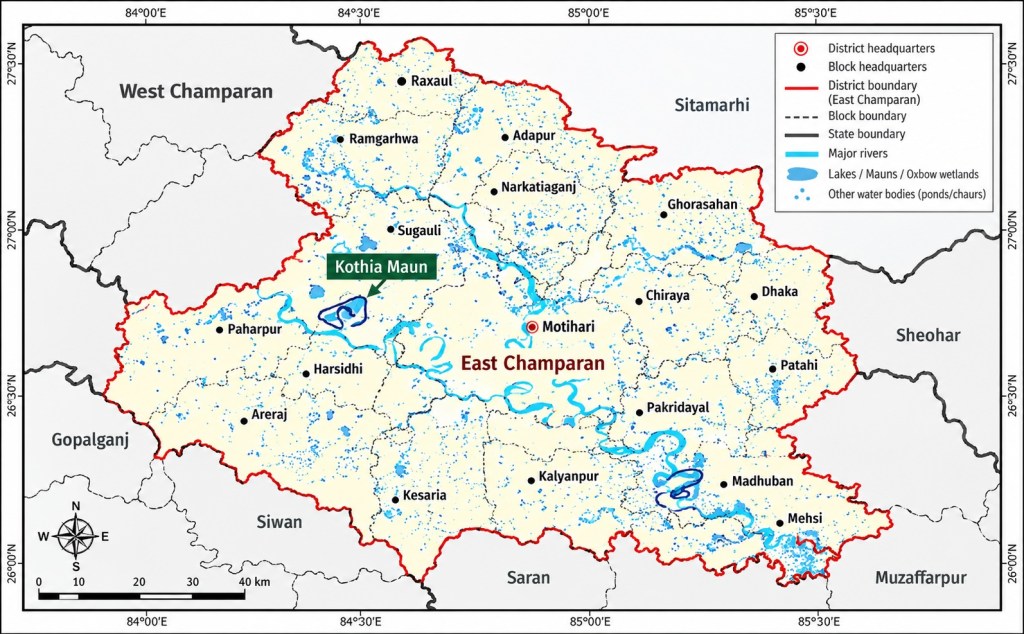
Map 1: Bihar’s East Champaran District has a Number of Natural Wetlands
As per the Bihar Fisheries Jalkar Management Act, 2006 the Department of Fisheries, Government of Bihar, holds ownership of the state’s open water bodies. Fishers are granted access to these water bodies under specified conditions and reasonable restrictions. Some chaurs in Bihar are privately registered properties and remain under private ownership. Fisheries management rights for government-owned mauns and chaurs are allocated to fishers, Fishermen Co-operative Societies, and fishers’ Self-Help Groups. These mauns and chaurs are leased to the highest bidder from the traditional fisher community, Fishermen Co-operative Societies, or Self-Help Groups for a lease period of 5 years (now after 2018 amendment). A new clause was added in 2018, prohibiting any Fishermen Co-operative Society from altering the settlement period with its members without the approval of the competent authority.
The important change in Bihar has been the gradual development of a system in which the state retains its regulatory role but gives organised fishing communities a greater role in the management and use of jalkars. The Bihar Fish Jalkar Management Act of 2006 was an important step in this direction. The Act defines jalkar broadly to include tanks, ponds, ahars, rivers, water channels, chaurs, reservoirs, lakes and oxbow lakes under the fisheries department. It also provides for fishermen’s cooperative societies at the block level, with membership restricted to professional fishermen.
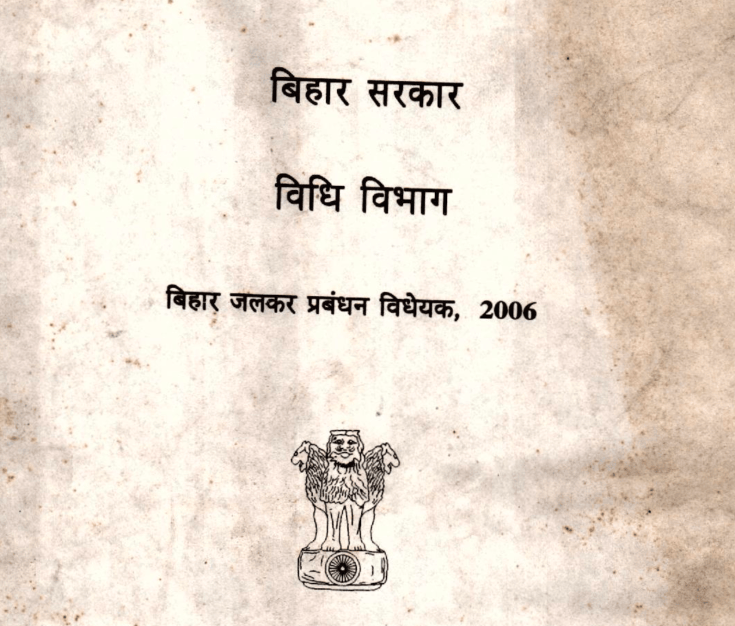
Photo 3: Jalkar Act, 2006
The significance of this arrangement lies in the institutional relationship it creates between the state and fishing communities. The state does not simply withdraw from fisheries management. It continues to classify water bodies, regulate their settlement and oversee the system through the fisheries administration. At the same time, fishermen’s cooperative societies become important institutions through which fishing rights can be settled among their members. The objective, as expressed in subsequent amendments to the Act, is not merely to settle fishing rights. It is also to increase fish production scientifically and create greater employment opportunities for fisherfolk. This makes the Bihar model interesting from the perspective of governance. It combines state regulation, community institutions and scientific management rather than treating them as mutually exclusive alternatives.
Why Community Participation Matters?
There is an important difference between giving a community access to a resource and giving it responsibility for managing that resource. If fishing rights are insecure or are repeatedly auctioned to whoever can pay the highest price, there is little incentive for fishers to make long-term investments in the health and productivity of a water body. A fisher who knows that a wetland will remain available to the cooperative for a longer period has an incentive to invest in stocking, equipment and management. The relationship becomes one of stewardship rather than simply extraction.This is also where the idea of the commons becomes useful. A commons does not necessarily mean unrestricted access. A commons is a resource governed through institutions that determine who has access, how it can be used and what responsibilities users have towards it.
The distinction is important in the case of Bihar. The objective is not to return to an imagined past in which everybody could fish everywhere. Rather, it is to create institutions in which rights, responsibilities and benefits are connected.
Research on inland fisheries in Bihar also shows that different management arrangements can produce different economic and social outcomes. Cooperative management is therefore not automatically successful; its effectiveness depends on the quality of institutions, leadership, access to technology and markets, and the participation of fishing communities. This is an important characteristic of the Bihar model. The cooperative itself is not the solution. Good governance is the solution. Cooperatives provide an institutional framework through which good governance can potentially be developed.
Kothia Maun: Example of a Successful Case
One of the most interesting examples comes from Kothia Maun in East Champaran. Kothia is an oxbow wetland of about 60 hectares, associated with a local fishermen’s cooperative. A fisheries development initiative involving ICAR-CIFRI sought to combine scientific fisheries management with community participation. The project introduced improved stocking, rearing ponds, cages and pens, while working with local fishers.
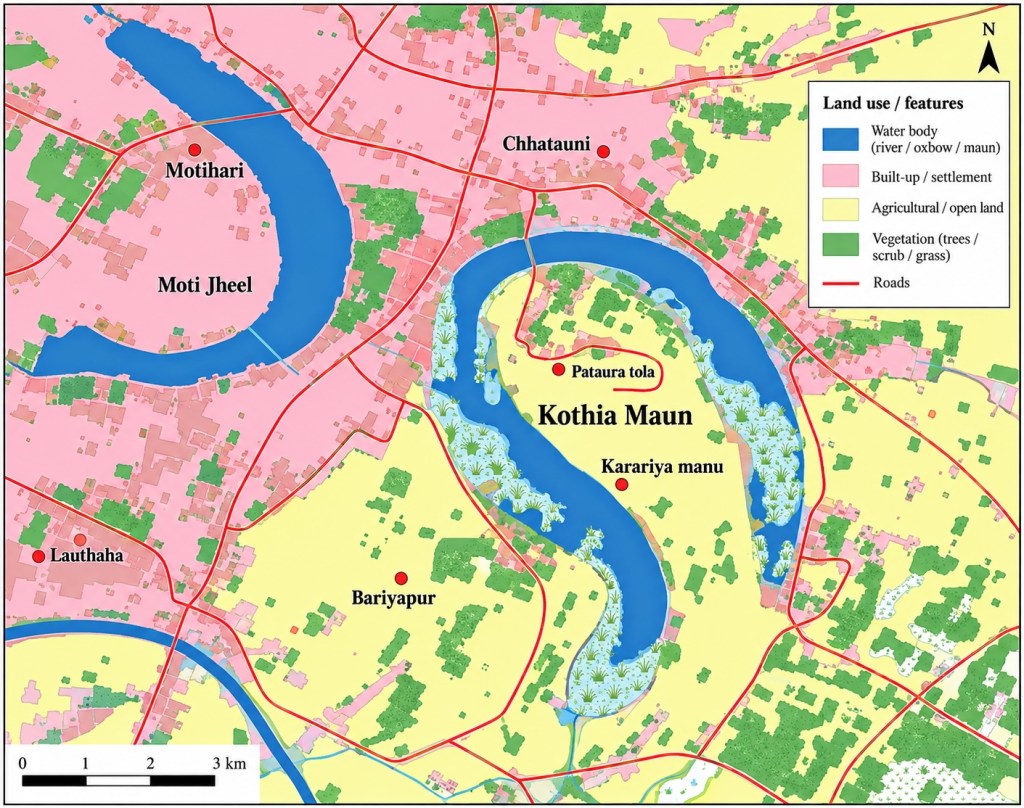
Photo 4: Kothia Maun in East Champaran [Based on ICAR–Central Inland Fisheries Research Institute, 2019]
The results provide a useful indication of what this kind of institutional arrangement can achieve. The government data reports an increase in fish production from 1.4 metric tonnes to 2.9 metric tonnes. More than 100 fishers were trained in improved fisheries practices, while mechanisms were introduced for retaining a portion of income for future stocking and management. ICAR’s account of the Kothia initiative provides further evidence of its livelihood effects. It reports that fishing days increased substantially and that the project helped reduce the need for fishers to migrate in search of alternative employment.

PHOTO 5: Fishers in a Maun
What is significant here is not simply the increase in fish production. The more interesting point is how the increase was achieved. Scientific knowledge was introduced, but the local fishing community remained part of the management process. The wetland was not treated merely as an empty space into which a technological package could be inserted. The existing users of the resource became participants in its development. This is perhaps the strongest aspect of the Bihar experience.
Science and local knowledge
Inland fisheries are particularly dependent on local ecological conditions. A wetland may behave differently from a river, an oxbow lake from a reservoir, and a seasonal chaur from a perennial pond. Local fishers often possess detailed knowledge of these variations – the timing of floods, fish movement, breeding periods, changes in water depth and the characteristics of particular water bodies. Scientific intervention can add another layer of knowledge: improved fish seed, stocking techniques, water-quality management, enclosure culture, disease management and methods of increasing productivity.
The Bihar model becomes particularly interesting when these two forms of knowledge are brought together. This is also consistent with the current approach of the Bihar Directorate of Fisheries, which explicitly identifies community participation and ecosystem-based management as part of its strategy for improving the productivity of riverine fisheries, reservoirs and wetlands. ICAR-CIFRI’s continuing engagement with Bihar also suggests that this is becoming an important part of fisheries development. Recent training programmes for fish farmers in Bihar have focused on scientific inland-fisheries management, sustainable productivity and livelihood enhancement.
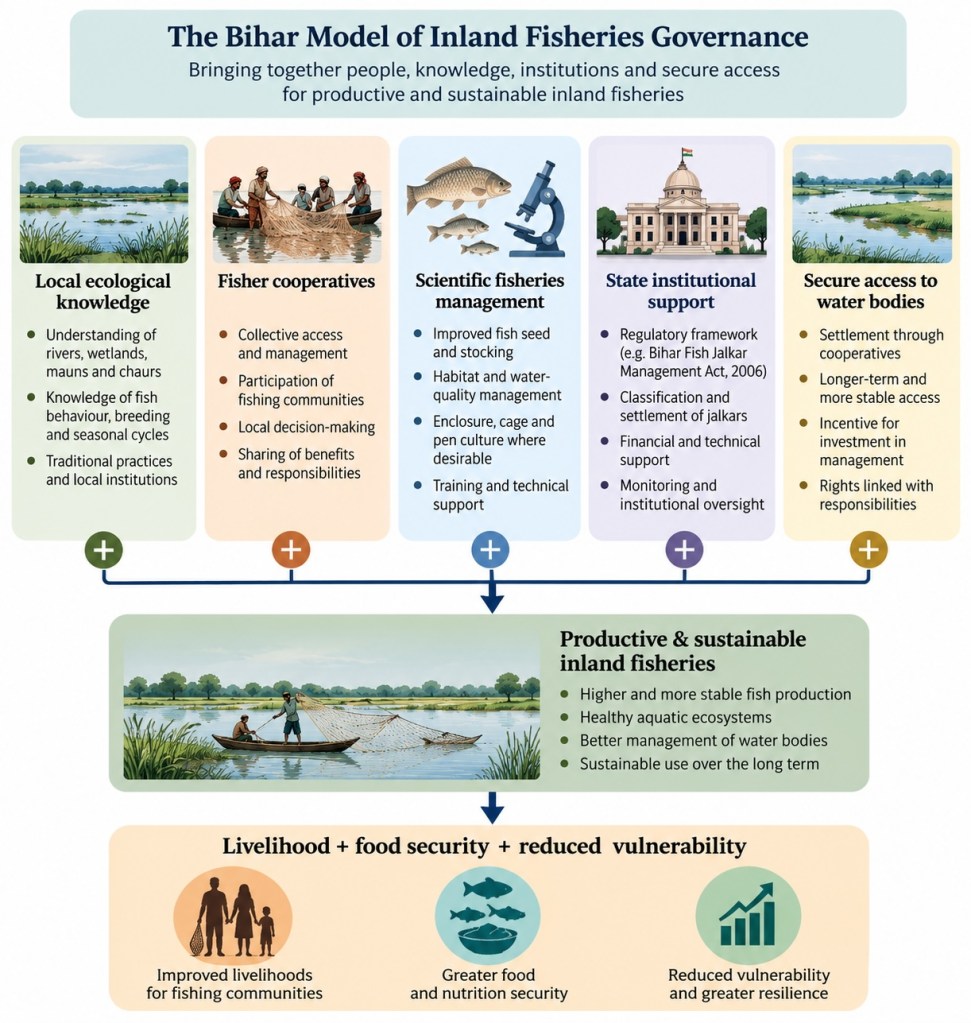
Diagram 1: Bihar Model of Inland Fisheries Governance [AI generated image]
Is Bihar a successful model?
There is good reason to believe that Bihar’s model of Inland fisheries governance model has been successful. Fish production in the state has increased considerably. Government data put Bihar’s fish production at about 8.73 lakh tonnes in 2023–24. The state’s fisheries department also explicitly emphasises productivity enhancement, livelihood generation and community-participatory management. But it would be too simple to attribute this entire increase to the cooperative governance model. The expansion of fisheries in Bihar also reflects the growth of aquaculture, technological interventions, government schemes, infrastructure, fish seed production and increasing investment in the sector. Bihar model demonstrates the possibilities of a governance arrangement in which community institutions form an important part of a wider fisheries-development system. The Kothia Maun experience is particularly valuable because it provides a more concrete example of the connection between institutional participation, scientific intervention, increased productivity and livelihood benefits.
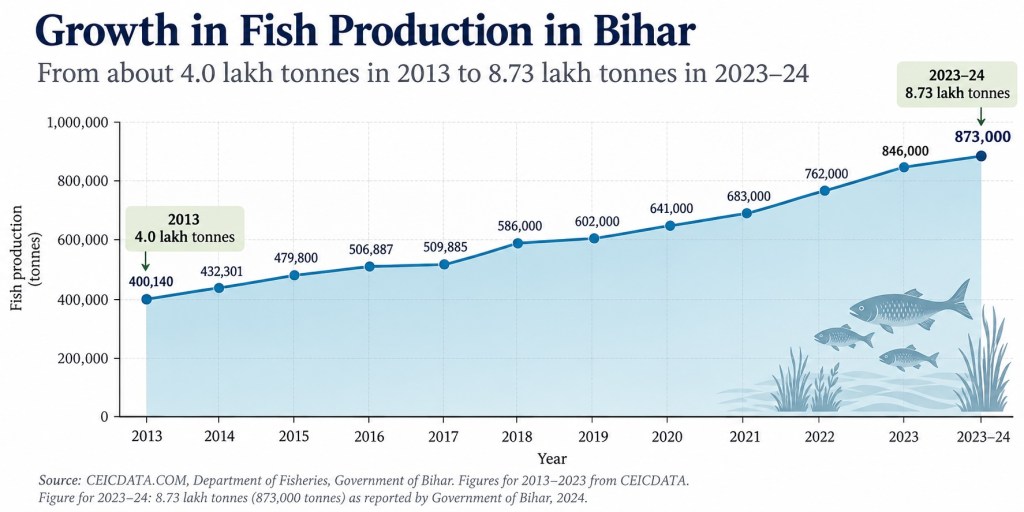
Diagram 2: Growth in Inland Fish Production in Bihar [AI generated based on ICAR–Central Inland Fisheries Research Institute, 2019 data and recent data of fish production in Bihar]
From Decommonisation to a New Form of Common Governance
The history of inland fisheries in Bihar can be read as a movement through different forms of governance. The colonial period saw the gradual decommonisation of fisheries. Customary access was increasingly replaced by formal property rights, leases and state regulation. Fishing communities that had depended on rivers and wetlands could find themselves working for those who controlled the fishing rights.
The present system in operation in Bihar does not simply reverse this process. Instead, it creates a different relationship between the state and the community. The state continues to regulate and support fisheries, while fishermen’s cooperatives can provide an institutional mechanism for organising access and participation. Scientific institutions such as ICAR-CIFRI add technical knowledge and capacity.
This is why I see Bihar not as a finished model but as an evolving model of governance of inland fisheries.The experience suggests that inland fisheries cannot be governed effectively by looking at fish production alone. Fisheries are part of larger aquatic ecosystems and social systems. The governance of a wetland therefore has to consider the ecology of the water body, the livelihood of its users, the institutional arrangements governing access, and the scientific and technological possibilities for improving productivity.
The historical experience of Bihar also reminds us that changing the rules of access to natural resources can have consequences far beyond the resource itself. When fishing rights were gradually separated from fishing communities during the colonial period, the relationship between people and the river also changed.
Today, the challenge is to create institutions that reconnect access, responsibility and benefit. Bihar’s experience suggests that this may be possible when community institutions, scientific knowledge and state support work together. The future of inland fisheries may therefore depend not only on how efficiently we can produce more fish, but on how intelligently we can govern the waters in which the fish live.
[Larger version of this paper is under publication.]
References:
- Bihar. Bihar Fish Jalkar Management Act, 2006.
- Das, Basanta Kumar, Ganesh Chandra, Suman Kumari, D. K. Meena, et al. Roadmap for Fisheries Development in Mauns and Chaurs of Bihar. Policy Paper 6. Barrackpore, Kolkata: ICAR–Central Inland Fisheries Research Institute, 2019.
- Nayak, Prateep K., and Fikret Berkes. “Commonisation and Decommonisation: Understanding the Processes of Change in the Chilika Lagoon, India.” Conservation and Society 9, no. 2 (2011): 132–145.
- Singh, Vipul, and Sonu K. Gupta. “Modern Acts, Conservation of Fish and Colonial Interest: Inland Fisheries in Mid-Ganga Diara Ecology, India.” In Inter-Sectoral Governance of Inland Fisheries, edited by Andrew M. Song et al., 122–133. TBTI Publication Series E-01/2017.
- Song, Andrew M., et al. “Intersectorality in the Governance of Inland Fisheries.” Ecology and Society 23, no. 2 (2018): 17.
[Total Words: 1500; Reading Time: 8 minutes]


Leave a comment