
Did epic stories travel across the ancient world long before they were written down? By comparing Homer’s Odyssey with the Ramayana and the Mahabharata, this essay explores striking similarities in these epic motifs – the impossible bow and the wilderness monster.
Vipul Singh
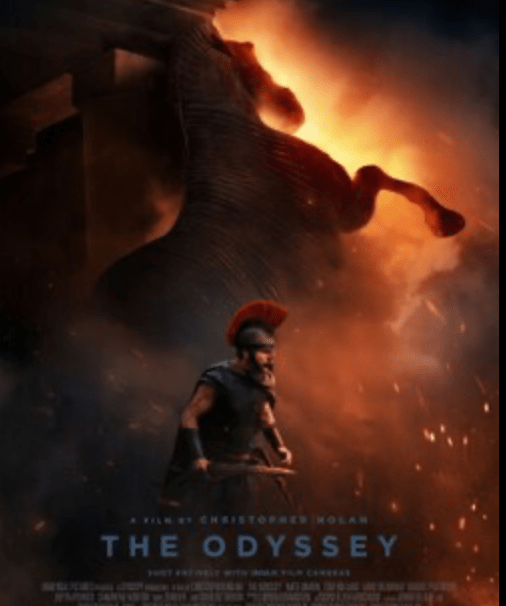
Watching Christopher Nolan’s The Odyssey was a spectacular cinematic experience. The film captures the extraordinary journey of Odysseus, who returns to Ithaca after twenty years of war. The film is inspired primarily by Homer’s Odyssey, and draws on the broader Trojan War tradition. One of the most memorable episodes is the ingenious story of the Trojan Horse. After years of failed siege, the Greeks pretend to sail away, leaving behind a gigantic wooden horse with a group of warriors hidden inside. The Trojans mistake the giant wooden horse for a parting gift left behind by the retreating Greeks and drag it into the city. That night, the hidden Greeks climb out, open the gates of Troy, and the waiting Greek army storms in to end the war.The Odyssey also includes some unforgettable encounters with monsters such as the Cyclops Polyphemus, Scylla, and Charybdis.
As I watched the film, what intrigued me most was not the uniqueness of these adventures but their familiarity in the Indian epics. Several of Homer’s narrative motifs seemed surprisingly close to episodes in the Ramayan and the Mahabharat. We have stories of monstrous beings inhabiting forests, and the heroes confronting them, and also stories of the extraordinary bow that only the hero of the epics can wield. These themes are embedded in both the Odyssey and the Indian epics.
The Impossible Bow/ Dhanush
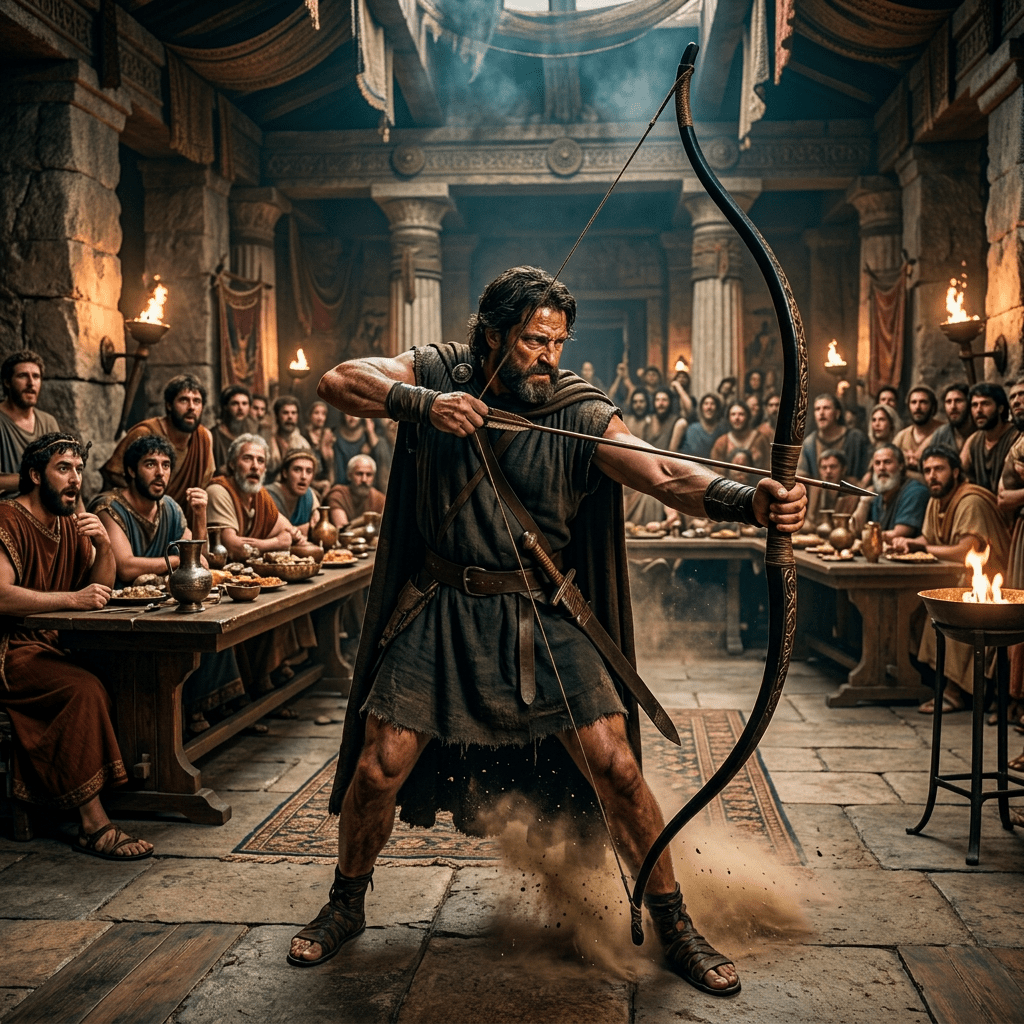
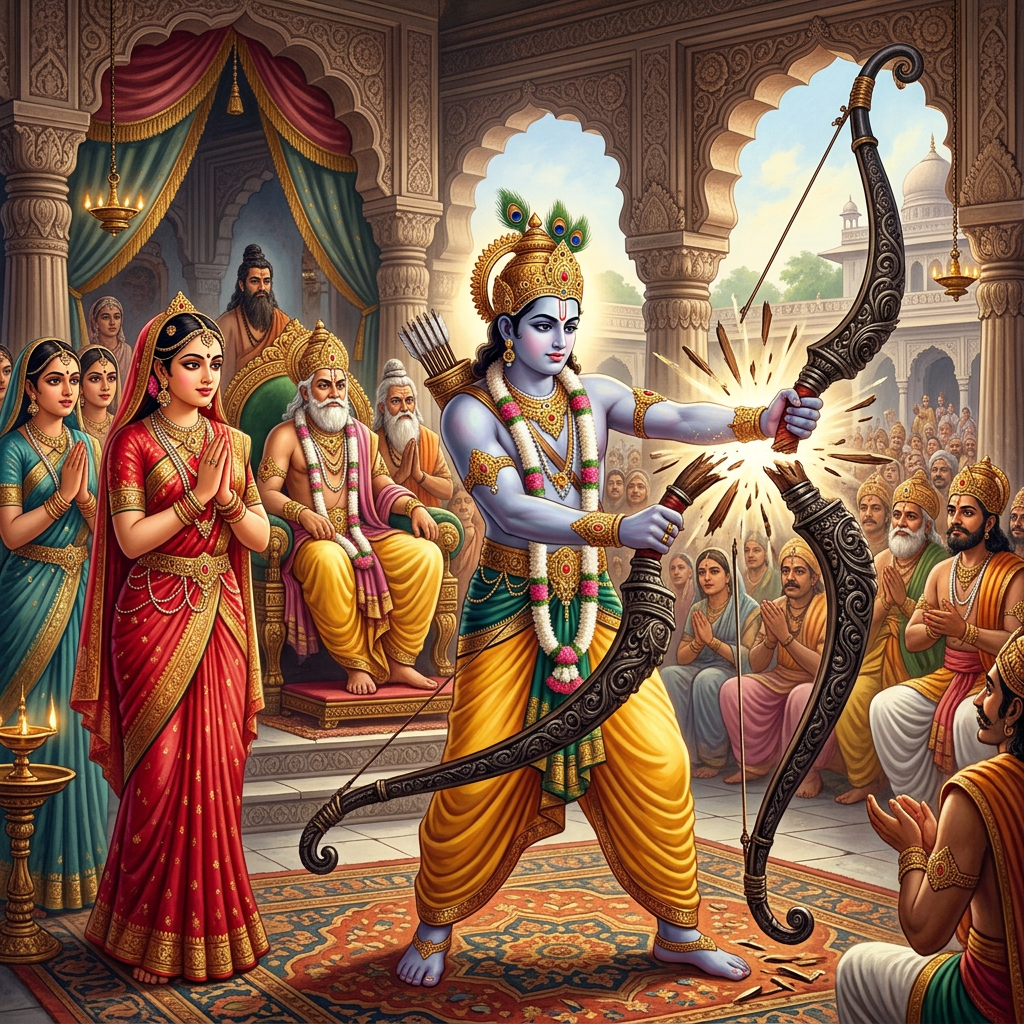
The similarity of the Impossible bow motif, in particular, deserves closer attention. The Odyssey heroine Penelope declares that she will marry the man who can string Odysseus’ mighty bow and shoot an arrow through a row of axe heads. The assembled suitors and young aristocrats competed for her hand and Odysseus’ throne. They are not able to even string the bow. Odysseus, disguised as an old beggar, accomplishes the feat effortlessly. He then reveals himself as the rightful king and husband. The Ramayan presents an equally compelling parallel. At Sita’s svayaṃvar, King Janak announces that only the man capable of lifting and stringing Shiva’s colossal bow or Dhanush called Pinak may marry his daughter. Many of the powerful kings of the age fail even to lift the bow. Ram arrives not as a conquering emperor but as a relatively unknown prince accompanying the sage Visvamitra. He not lifts the mighty bow but in the very act of stringing it, breaks it in two. His feat wins Sita’s hand and publicly establishes him as the ideal Kshatriya.
The Mahabharat offers another striking variation of the same motif. At Draupadi’s svayaṃvar, the assembled kings must first string a massive bow before attempting the celebrated feat of striking the revolving fish’s eye by looking only at its reflection. Many fail even to string the bow. Arjun disguised as a Brahmin, steps forward and strings the bow effortlessly. He then completes the impossible shot, and wins Draupadi’s hand. As in the Odyssey, the concealed hero reveals his true identity through a feat that no rival can perform.
Across all three epics, the sequence is quite similar. An extraordinary bow becomes the supreme test of worthiness. The greatest warriors fail before it. The true hero appears in an unassuming guise. He alone accomplishes the impossible. His success simultaneously resolves a crisis of identity, establishes legitimate authority, and secures marriage.
The Monster/ Rakshasa
Another striking parallel between Homer’s Odyssey and the Indian epics lies in their portrayal of monstrous beings who inhabit the margins of the civilized world. Homer’s landscape is populated by creatures such as the Cyclops Polyphemus, the six-headed sea monster Scylla, and the deadly whirlpool Charybdis. These are not random inventions. They occupy caves, remote islands, narrow sea passages, and other liminal spaces that separate the known world from the unknown. To complete his journey home, Odysseus must pass through these dangerous landscapes, confronting monsters that test not only his courage but also his judgment and endurance.
The Cyclops Polyphemus is perhaps the most memorable of these encounters. He is a gigantic one-eyed monster, who lives alone in a cave. Odysseus and his men are trapped inside the cave and many of his men were eaten by the Cyclops. Odysseus survives through his superior intelligence. He blinds the Cyclops and escapes beneath the bellies of sheep. Later in his voyage, he faces an even more difficult choice. On one side of a narrow strait waits Scylla, a six-headed sea monster that snatches sailors from passing ships. On the other side lurks Charybdis, a monstrous whirlpool capable of swallowing an entire vessel. Warned that no ship can escape both unharmed, Odysseus deliberately sails closer to Scylla. In the process, he sacrifices six companions to save the rest of his crew. The episode has become a timeless metaphor for choosing the lesser of two unavoidable evils.
A close parallel of such monster stories are also found in the Indian epics. The closest parallel is perhaps Bhim’s encounter with Hidimba in the Mahabharat. As the Pandavas wander through a dense forest after escaping the lac palace, they enter the territory of Hidimba. He was a man-eating rakshasa who lives there with his sister Hidimbi. Like Polyphemus, Hidimba preys upon travellers who venture into his domain. Bhim confronts the demon in single combat and kills him, allowing the Pandavas to continue their journey. Hidimba is not one-eyed, but both figures represent monstrous beings who inhabit the margins of civilization and threaten anyone who enters their world.
Another monster story is that of Bakasur. This fearsome rakshasa lives outside a town and terrorizes its inhabitants. To appease him, the townspeople are forced to send him enormous quantities of food along with a human victim at regular intervals. When Bhim learns of this, he volunteers to go in place of the chosen victim and kills him. As in the Cyclops episode, the monster feeds on human beings, an entire community lives in fear, and only an exceptional hero is capable of ending that terror.
The Ramayan offers another interesting parallel in the figure of Viradha. This gigantic demon inhabits the forests of Dandak, attacks Ram and Lakshman, and abducts Sita. His immense size, his near invulnerability, and his existence deep within the wilderness evoke the world of Polyphemus, even though the story unfolds quite differently. An even closer mythological equivalent is Kabandh. This grotesque giant lives alone in the forest. His body is so deformed that his mouth is located in his belly, while his extraordinarily long arms allow him to seize unsuspecting travellers from a distance. Like Polyphemus, Kabandh inhabits an isolated and terrifying landscape where ordinary people cannot survive. Ram and Lakshman eventually defeat him, transforming a place of fear into one through which civilization can once again pass. The Mahabharat contains yet another variation in the story of Kirmir. This fearsome rakshas dwells in a dark forest, obstructs travellers, and spreads terror throughout the countryside. Once again, Bhim confronts and kills the monster, restoring safety to the landscape.
The resemblance between these episodes and the Cyclops story suggests that almost every early civilization has imagined giants and demons. The more significant similarity, however, lies in the way these figures function within the narratives. Both Homer and the Indian epics of the Ramayan and the Mahabharat construct a symbolic geography. Civilization is represented by kingdoms, families, marriage, and law. Beyond its boundaries lies a wilderness of forests, caves, mountains, and seas inhabited by giants, rakshasas, and supernatural beings. Heroes must leave the safety of the civilized world, enter these dangerous frontiers, overcome the forces of chaos, and only then return to restore political and moral order.
The motifs of the impossible bow and the wilderness monster are not just isolated similarities. Together, they reveal a common pattern in the way the Greek and Indian epics imagine the making of a hero. The ideal ruler is not born legitimate. He earns legitimacy by passing through two trials. The first is a journey into the wilderness, where he confronts monsters that threaten the very boundaries of civilization. The second is a public demonstration of worthiness, symbolized by the impossible bow that no ordinary warrior can wield. Odysseus, Ram, and Arjun all emerge from these trials not merely as victorious heroes but as rightful rulers whose authority has been tested by both chaos and society.
Conclusion
These parallels naturally invite a broader historical question. Did these motifs emerge independently in different civilizations? Do they preserve memories of a shared Indo-European mythological tradition? Or do they reflect the movement of stories, storytellers, and ideas across the interconnected world of Bronze and Early Iron Age Eurasia? The available evidence does not permit a definitive answer. But the similarities are too striking to dismiss as mere coincidence. They deserve to be explored more seriously than they have been so far.
The motifs of the impossible bow and the wilderness monster invite us to look beyond the surface differences between the Greek and Indian epics. In both traditions, the hero’s journey unfolds in two stages. First comes the encounter with the untamed living in wilderness. The forests, caves, islands, and mountains are inhabited by giants, rakshasas, and monstrous beings, who exist outside the bounds of civilization. The hero first overcomes the forces of chaos by defeating the monster. He must then prove his worthiness to rule through a public test, which is symbolised by the extraordinary bow that no ordinary warrior can wield. Whether in the hands of Odysseus, Ram, or Arjun, the bow becomes an instrument of destiny. These recurring motifs may have arisen independently. They may have emerged from a shared mythological heritage, or travelled across the interconnected landscapes of the ancient world. Whatever their origin, they remind us that the great epics of Greece and India were grappling with similar questions about heroism, kingship, legitimacy, and the restoration of moral order. In that sense, the recurrence of these motifs should make us pause before treating Homer and the Indian epics as products of isolated civilizations. The impossible bow and the cave-dwelling monster are not incidental details. They are central narrative devices that define the making of a hero. Such close structural similarities do not by themselves prove cultural borrowing. Yet they do invite us to ask whether the ancient world was more interconnected than conventional histories have assumed. The stories, may have travelled across continents long before they were written down through the merchants and pilgrims.
As a historian, I find it difficult to dismiss these similarities as mere coincidence. At the same time, it would be historically incorrect to conclude that Homer borrowed directly from Valmiki or Vyasa, or vice versa, without convincing evidence. Ancient Eurasia was not a collection of isolated civilizations. It was a world connected by trade, migration, diplomacy, and, above all, oral storytelling. Stories could travel even when books did not. Ideas and motifs could cross mountains, deserts, and seas long before they were written down. So perhaps the more interesting question is not whether Homer copied Valmiki or Vyasa, but whether all these epics emerged from a connected world in which stories travelled across cultures and generations. The motifs of the impossible bow and the wilderness monster do not provide a definitive answer. But they certainly encourage us to ask the question.
[Total words: 1850]
 Speaking History
Leave a comment