

Vipul Singh
Doodnath Tewari’s daring escape from the Andaman Islands prison in 1858 and his intense 14-day struggle in the jungle weave a captivating story of survival. Explore what drove his extraordinary journey and uncover how he spent over a year immersed in the lives of indigenous people.
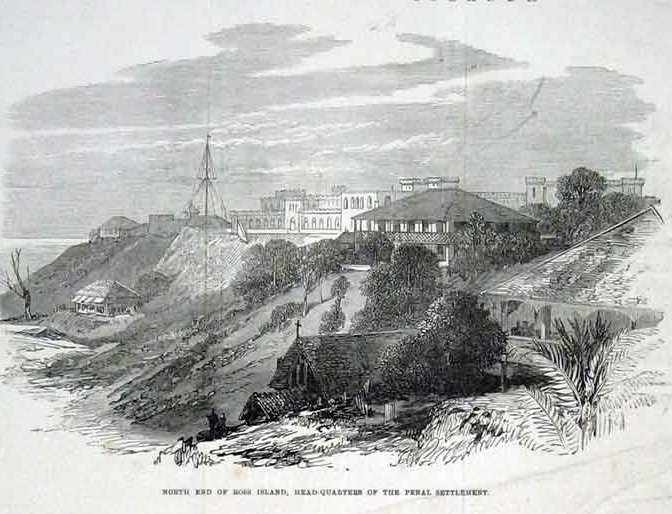
In the turbulent aftermath of the 1857 sepoy rebellion, British authorities, seeking to quell dissent and prevent further unrest, resorted to exiling rebellious convicts to the remote Andaman Islands. It was commonly referred to as Kala Pani due to its brackish water and extremely harsh, inhospitable conditions.
Among these exiles was Doodnath Tewari, a sepoy from the 14th Regiment of Native Infantry, who had been sentenced to life imprisonment and hard labour for his involvement in the uprising against British rule in Jhelum. His journey from a condemned man to a remarkable escapee is a testament to his resilience and resourcefulness.
Conditions at the Penal Settlement
Doodnath’s arrived at Port Blair on April 6, 1858, and was immediately sent to Ross Island, one of the main penal settlements. The islands in the Andaman archipelago were characterized by their harsh environment and brutal treatment of prisoners. Ross Island, along with Chatham Island and Viper Island, was home to approximately 1,600 sepoy convicts. The conditions in these penal settlements were notoriously severe, with the environment proving to be as punishing as the prison guards. The Great Andaman Island, the largest of the group, stretched approximately 140 miles in length and 20 miles in width. Despite its proximity, the island was widely misunderstood by the sepoys, who often believed it was part of Bengal or, at the very least, Burma. This misconception led many to attempt daring swims to and from the island, often at great peril.
The Great Andaman Island was enveloped in dense, nearly impenetrable jungles. The trees, straight and towering between thirty and forty feet, had roots that spread only about one foot and formed tangled masses. The foliage was limited to the tops of the trees, leaving the trunks bare and branchless. The entire island was believed to be covered in continuous hills rising about 500 feet high. There was no grass, and water was scarce, with only intermittent brooks that turned into torrents during the rainy season and dried up in the summer. The wildlife on the island was minimal, consisting mainly of rats, snakes, and small pigs. The indigenous people, with whom all attempts at interaction had failed, added another layer of isolation for the convicts.
The Daring Escape
On April 23, 1858, Doodnath Tewari, along with ninety other convicts, executed a daring escape from Ross Island. They constructed rafts from felled trees and ropes, guided by Aga, a convict with dubious navigational skills who claimed they would reach the shores of Burma. The escapees set out with high hopes but soon found themselves in a grim reality when they landed on the Great Andaman Island. The vast expanse of rugged, impenetrable jungle proved to be a formidable challenge. The dense vegetation, towering trees, and lack of accessible water created severe hardships for the group.
Over the course of fourteen gruelling days, the escapees struggled to survive. Food and water were in short supply, and many convicts succumbed to starvation and dehydration. Doodnath Tewari and the other fugitives faced relentless adversity. They had almost no food for eight days, surviving only on limited fruit and whatever water they could obtain from small springs or by cutting huge creeping canes. Despite their efforts, twelve men perished from hunger and thirst.
Encounters with the Natives
On the fourteenth day, while deep in the jungle, the escapees were surrounded by approximately 100 indigenous people armed with bows and arrows. The convicts, desperate and exhausted, attempted to plead for mercy. However, their pleas were largely ignored, and many were killed or wounded. Doodnath Tewari, who had sustained severe arrow wounds, fled with two other convicts and a Kurmee caste convict. They made their way to a tidal creek and then to the seashore, where they spent the night. The following morning, they were pursued by the natives. Doodnath Tewari’s companions were killed, and he sustained further injuries but managed to avoid capture by pretending to be dead.
The natives eventually provided aid, taking Doodnath Tewari to an island they called Turmooglee. Doodnath Tewari later identified this island on a chart as being about eight miles from the Great Andaman Island. During his year-long experience with the natives, he claimed that he adapted to their customs and maintained good health, aside from his wounds. The natives did not force him to work but treated him with suspicion, especially when it came to their weapons.
Life Among the Natives
Doodnath Tewari observed the daily life of the indigenous people, noting their customs and way of life. The natives managed domestic tasks such as cooking and making fishing nets, while the men hunted pigs and gathered water and shellfish. They used a small piece of glass to shave, and tattooed their bodies with intricate designs using shards of bottle-glass. Red earth mixed with turtle oil was applied for various ailments, and tattoos were applied gradually over a period of two to three years.
The native society was commune based, with the population living in migratory groups. They did not consume raw animal food, were not cannibals, and lived entirely naked, with their bodies painted for decoration. The native women, responsible for domestic chores, would often travel miles to gather fresh water, carrying it in large bamboos. The native population appeared to be increasing, as births exceeded deaths.
Doodnath Tewari also witnessed several native marriages, which were simple and unceremonious. The bride and groom sat silently on a bed of leaves, and the ceremony concluded with the presentation of iron-headed arrows. Doodnath Tewari’s own marriage to two native women, Leepa and Jigah, was even less formal, lacking any ceremonial elements. He was simply seated between his two wives by the chief, with no arrows involved in the process.
Return and Legacy
Doodnath Tewari’s return to the convict settlement at Aberdeen near Port Blair on May 17, 1859, was driven by a sense of duty and loyalty. He brought with him crucial intelligence about an impending attack by the Andamanese. Although his return was marred by the loss of his beloved Leepa, his timely information proved vital in helping the British forces repel the planned assault during the Battle of Aberdeen.
Doodnath Doodnath Tewari’s extraordinary survival story, while sometimes viewed with skepticism by historians, offers a rare and compelling glimpse into the lives of the Andamanese and the harsh realities faced by convicts in one of the British Empire’s most isolated and challenging environments. His tale of escape and survival stands as a remarkable testament to human endurance and the complex interplay between colonizers and the colonized.
References:
- Chambers’s Journal of Popular Literature, No. 325, March 24, 1860.
- M.V.Portman, A History of Our Relations with the Andamanese, Vol.1, Calcutta: Office of the Superintendent of Government Printing, 1899.
- Edward Belcher, “Notes on the Andaman Islands,” Ethnological Society Transactions, New Series 5, 1866.


Leave a Reply