

Vipul Singh
Understanding of India’s geographical boundaries cannot be solely attributed to British cartographic tradition. Instead, it is a product of various historical, political and cultural factors that have shaped the concept of India as a unified entity.
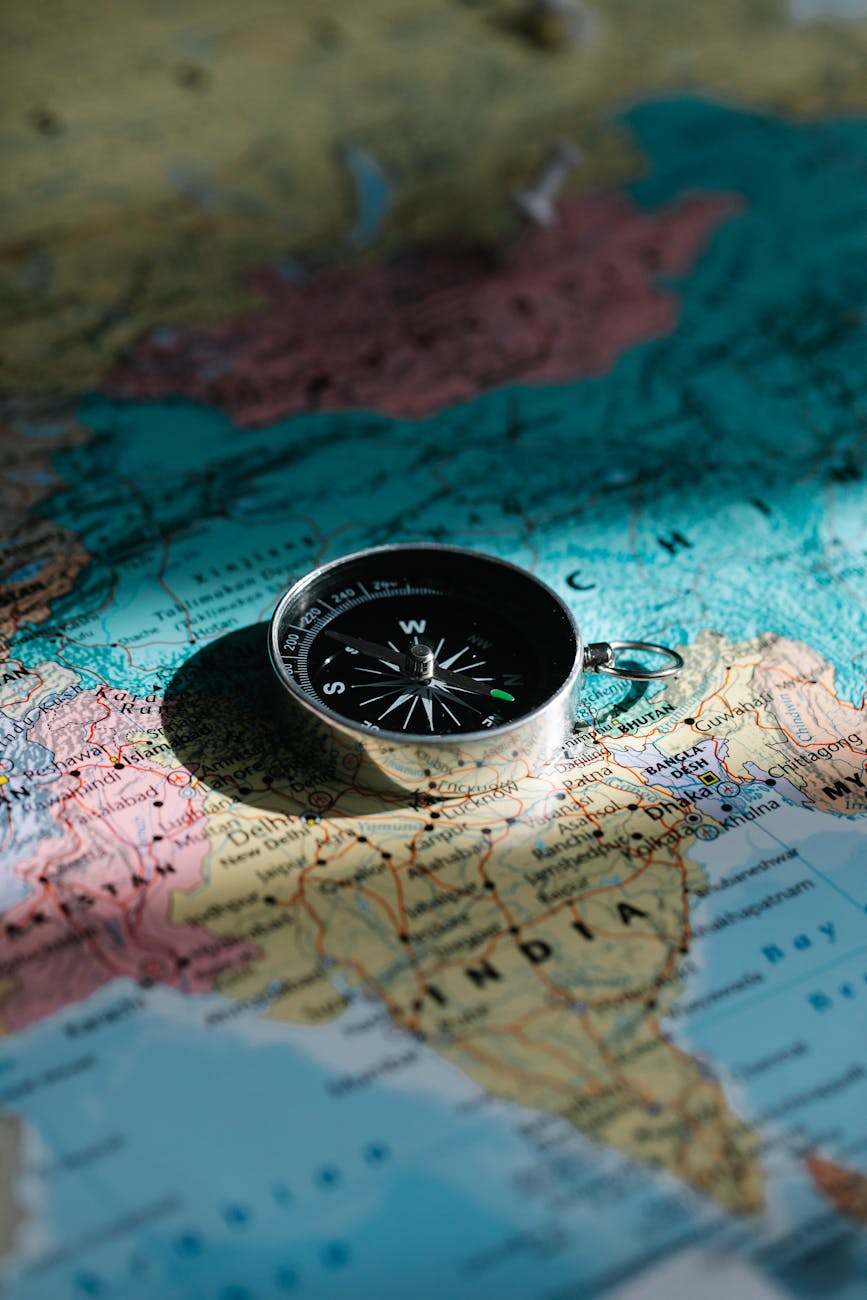
It is often said that India that we know today in geographical terms with fixed boundaries is the legacy of British cartographic tradition. The understanding of India’s geographical boundaries cannot be solely attributed to British cartographic tradition. Instead, it is a product of various historical, political and cultural factors that have shaped the concept of India as a unified entity.
The Mughal era, for instance, played a significant role in political consolidation, with European maps reflecting Mughal territorial organisation. Medieval rulers like Sher Shah demonstrated an early understanding of ecological distinctions, contributing to the delineation of territorial boundaries based on natural features. Akbar’s administrative reforms further solidified this concept, with the division of the Mughal territory into provinces or subas.
European cartographers later integrated these notions into their depictions of India, as seen in James Rennell’s influential maps. As the Europeans started drawing the maps of Indian subcontinent they used these early conceptions. In the early period, European maps depicted the Indian subcontinent in three distinct ways. Initially, starting from the early 1500s, they showed the traditional Indies region, spanning from the Indus to Indochina. Then, in the sixteenth century, maps focused solely on the peninsula south of the river Krishna, reflecting European involvement in that area. In the early seventeenth century, the Europeans drew maps highlighting the Mughal empire’s polity, with a focus on its power center in the northern plains, including territories west of the Indus. These framings gradually merged in the eighteenth century, particularly as Mughal power expanded southward under Aurangzeb in the later seventeenth century. By the early eighteenth century, as the Mughal empire extended across most of the subcontinent, European cartographers incorporated the peninsula into their maps. James Rennell’s maps of India, accompanied by geographical memoirs, notably contributed to this new conception of the subcontinent as a unified region. New scientific mapping by the British surveyors were integral to imperial project. Rennell, serving as surveyor general of Bengal, organized geographical data collected by British army expeditions, subdividing India according to the Mughal provinces established by emperors Akbar and Aurangzeb. Col. MacKenzie also developed similar modern maps for Peninsula India.
However, even before the Europeans, in the medieval period, there was a strong desire to map India’s sacred geography, especially seen in the Sanskrit Puranas. The compilers of these texts highlighted various local pilgrimage sites and connected them to broader story-traditions, thereby promoting the significance of these sites both locally and regionally. In ancient texts like the Puranas, there are many lists of sacred sites, such as the fifty-one Shaktipithas related to goddess worship, and the twelve jyotirlihgas dedicated to the god Siva (Shiv Purana). These lists cover various places across the Indian subcontinent, suggesting a network of temples and holy centers. However, they also reveal a growing awareness of “India” as a unified cultural, religious, and geographical entity. Benjamin Fleming has argued that this could have been Brahmanical efforts aimed to integrate local traditions into broader religious frameworks contributed to this perception of India’s unity. The twelve jyotirlihgas, scattered from Uttarakhand to Tamilnadu and from Gujarat to Bihar (now Jharkhand), symbolize the spread of Saivism starting around the twelfth century CE. This grouping reflects how local pilgrimage traditions influenced regional and eventually pan-Indian concepts of the subcontinent’s sacred geography, particularly in their devotion to Siva.
These jyotirlihgas, along with major Saivite temple sites dating back to the late Gupta period, illustrate the gradual expansion of Saivism across India. From the sixth to ninth centuries CE, significant Saivite centers emerged in western, southern, and north-central India, paving the way for the systematic representation of Saivism throughout the subcontinent. The emergence of the twelve jyotirlihgas demonstrates how literary concepts and actual pilgrimage practices intertwined and evolved over time.
Hemchandra Raychaudhuri has given an interesting interpretations of India’s ancient territorial understanding, shedding light on its conceptual essence rather than purely geographic delineations. Within their scholarship, the notion of Bharatavarsha emerges as a central theme, rooted in the narratives of the Bharata tribe and elucidated within the Puranic texts. In the Puranic literature, Bharatavarsha is depicted as a distinct realm situated between the Himavat mountains and the oceans, forming a crucial part of the cosmography. This portrayal intertwines geographical features with mythological narratives, emphasizing Bharatavarsha’s role within the broader scheme of creation and royal lineage. Thus, Bharatavarsha becomes not just a physical expanse but a sacred landscape imbued with historical, religious, and symbolic significance.
B.D. Chattopadhyaya has argued that Bharatavarsha transcends mere geographical boundaries, representing a complex amalgamation of cultural, religious, and mythological elements. The term Bharatavarsha finds its origins in the Bharata tribe, a name recurrent in various ancient texts such as the Mahabharata epic, the Vedas, Brahmanas, and even certain Buddhist scriptures. However, its significance extends beyond a simple ethnic identifier; it symbolizes a broader conception of land intertwined with spiritual and cosmological dimensions. Thus, the ancient understanding of Bharatavarsha transcends modern notions of India, devoid of nationalist connotations. Instead, it represents a fluid and dynamic concept, deeply embedded within the cosmological worldview of ancient India. Geographical accuracy was of secondary concern to the compilers of ancient texts, who were more interested in articulating a conceptual image of Bharatavarsha within the larger framework of Puranic cosmography.For historians the concept of Bhartavarsh could be an interesting study as to how its geographical and cultural aspects got absorbed into literary and oral traditions.
India as a nation we may say is a multifaceted construct that extends beyond political boundaries. It is shaped by historical and cultural influences that have evolved over millennia.
References:
- Benjamin J. Fleming, ‘Mapping Sacred Geography in Medieval India: The Case of the Twelve “Jyotirliṅgas”’, International Journal of Hindu Studies, Apr., 2009, 13/ 1 (2009): 51-81.
- Braja Dulal Chattopadhyaya, Concept of Bharatavarsha and Other Essays. Albany: State University of New York, 2018.
- Diana L. Eck, India: A Sacred Geography, New York: Three Rivers Press, 2012.
- Hemchandra Raychaudhuri, Studies in Indian Antiquities. Calcutta: University of Calcutta, 1989.
- Irfan Habib, An Atlas of the Mughal Empire. Delhi: Oxford University Press, 1986.
- Joseph Schwartzberg ed. A Historical Atlas of South Asia, Chicago: University of Chicago Press, 1978.
- Kapil Raj, ‘Circulation and the Emergence of Modern Mapping: Great Britain and Early Colonial India, 1764-1820’, in Relocating Modern Science. Circulation and the Construction of Scientific Knowledge in South Asia and Europe. Delhi: Permanent Black, 2006.
- Matthew Edney, Mapping an Empire: The Geographical Construction of British India, 1765-1843, Chicago: University of Chicago Press, 1990.
- S. Khilnani, The Idea of India. London: Hamish Hamilton Ltd., 1997.
- Susan Gole, Indian Maps and Plans. From Earliest European Surveys. Delhi: Manohar, 1989.
- U. Kalpagam, ‘Cartography in Colonial India’, Economic and Political Weekly, 30/30 (1995): PE87-PE98.
- Vipul Singh, “Ecopolitical Space in a Riverine Landscape of South Asia.” Environment & Society Portal,Arcadia (Spring 2024), no. 3. Rachel Carson Center for Environment and Society. https://www.environmentandsociety.org/node/9810
 Speaking History
Leave a comment