
Vipul Singh
1492 marked a transformative shift in global interactions between humans and nature. With Columbus’s voyage and subsequent explorations, a new era of contact and biological exchange commenced on a global scale, forever altering the trajectories of both ecosystems. It triggered an ecological revolution of unprecedented magnitude, characterised by its rapidity, magnitude, and far-reaching consequences.
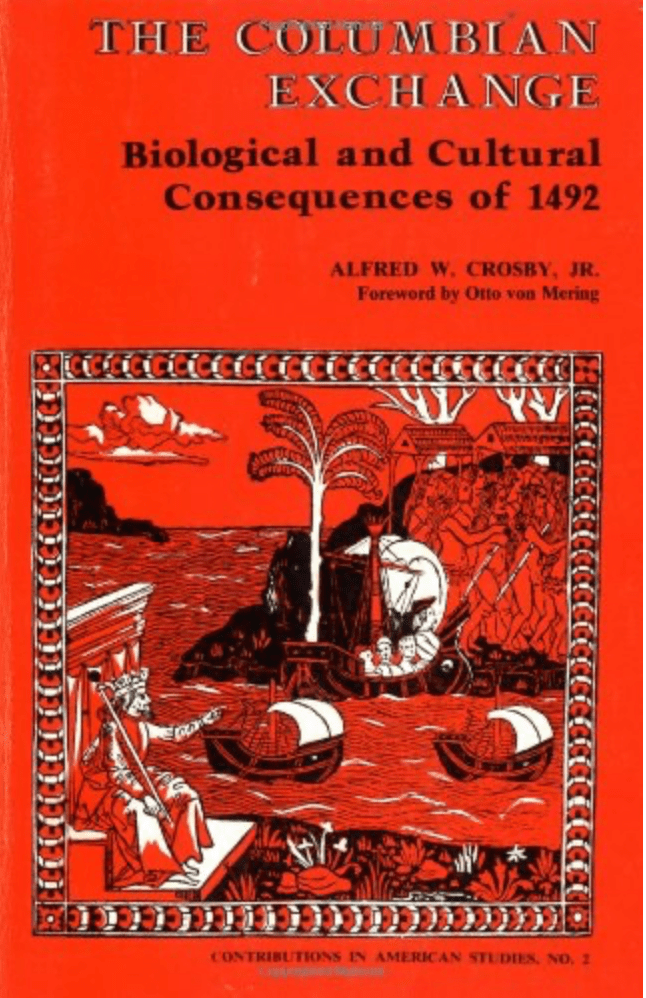
Alfred Crosby coined a term “Columbian Exchange” in 1972. The Columbian Exchange happened when things like animals, germs/diseases, plants/crops, and people were exchanged between the Americas and the rest of the world after Christopher Columbus found America in 1492. Before Christopher Columbus’s voyage across the Atlantic Ocean, the Eastern Hemisphere (encompassing Europe, Africa, and Asia) and the Western Hemisphere (comprising the Americas) existed as two distinct ecosystems, each having evolved in biological isolation over thousands of years. Christopher Columbus himself remarked on the stark differences he observed, noting that “all the trees were as different from ours as day from night, and so the fruits, the herbage, the rocks, and all things”. This demarcation translated into more than just ecological variance. It represented two separate realms inhabited by culturally diverse peoples, each with their own unique disease pools, flora, and fauna.

1492 marked a transformative shift in global interactions between humans and nature. With Columbus’s voyage and subsequent explorations, a new era of contact and biological exchange commenced on a global scale, forever altering the trajectories of both ecosystems. It triggered an ecological revolution of unprecedented magnitude, characterised by its rapidity, magnitude, and far-reaching consequences. These exchanges, however, disproportionately favored the Europeans at the expense of native peoples, leading to profound demographic shifts and environmental transformations that continue to resonate through history to the present day.
Alfred Crosby argues that even though Africa, Asia, and Europe have different living things, they are close to each other, and so living things could move between them quite easily. This movement, whether by land-routes, wind or by ships, made the ecosystems across these continents similar. But the Americas were different. For a long time, the Atlantic Ocean kept the Americas separate from the rest of the world. Then, when people started exploring, trading, and settling, they brought these two different ecological areas together for the first time. The ‘Old World’ consisting of entire eastern hemisphere including Europe, Asia and Africa.
During this new era of worldwide trade and people moving to new places, there was a big swapping of plants and animals. They brought horses and cows to the Americas, which seemed great for farming and work, but it changed how the land looked a lot. To grow crops and raise animals, they had to change the land. Sometimes they built dykes to stop water or cut down forests. Keeping animals in one place meant putting up fences, which made it hard for the native people and animals to move around like they used to. Sheep ate so much grass in Mexico that it became a dry place.
The exchange was not all one-sided. New stuff like coffee and cochineal were sent back to Europe. And they got new foods too, like corn, potatoes, and tomatoes, which changed how Europeans ate. It even gave some poor farmers a chance to sell their stuff and not rely on rich landowners so much. Rice, which later became a big crop in the Americas worked by slaves, came from Africa and was brought over by slaves. The most serious part of these exchanges was the diseases.
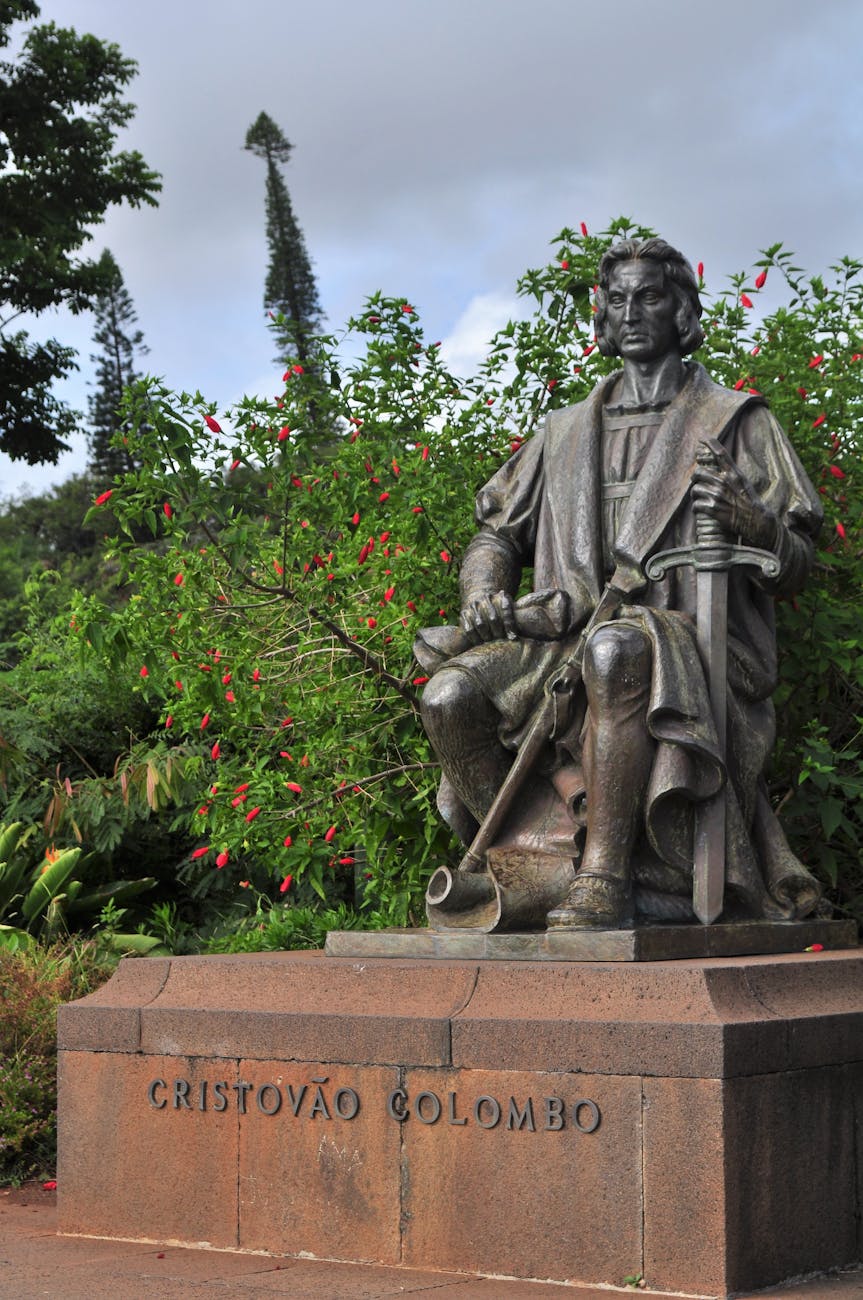
The Conquistador:
Both Native Americans and Europeans had their own diseases, but European ones were really bad. Unlike Europe and Africa, America did not have animals like cows and horses that could carry diseases. Lots of Africans and Europeans lived near animals, so they had some immunity to the diseases they carried. But Native Americans did not, and when Europeans came, it was devastating. Some say at least half (maybe even up to 90%) of the Native American populations on the east coast died because of European diseases.
Alfred Crosby has explored a significant question: What factors contributed to the Europeans’ relatively easy conquest of America? He explains that there are many reasons why the Europeans succeeded in America. They had better weapons made of steel, like swords and guns, while the indigenous peoples mainly had weapons made of stone. The Europeans also had horses, which scared the indigenous warriors who had never seen them before.
Even though the Europeans had these advantages, one might expect that the powerful empires of Mexico and the Andes, with their large armies and organised societies, would have been able to resist the Europeans better. But they did not. Even after learning that the Europeans were not gods and getting their own weapons and horses, the indigenous peoples still struggled to defend themselves effectively.
After the Spanish conquest, an indigenous person from Yucatan wrote about how life was before the Europeans arrived. They didn’t have the diseases like smallpox and fever that the Europeans brought with them. The arrival of the Europeans changed everything. Before that, people lived more peacefully and didn’t suffer from these terrible diseases.
The diseases brought by the Europeans, like smallpox, were devastating to the indigenous populations. The Europeans were mostly immune to these diseases because they had been exposed to them before. But the indigenous peoples had never encountered them, so they had no resistance. This meant that when the Europeans arrived, the diseases spread quickly and killed many people.
The first epidemic in America started in 1519 in the Caribbean and spread to Mexico, Central America, and possibly Peru. It caused a huge loss of life among the indigenous populations. Smallpox was one of the deadliest diseases, and it killed many indigenous people while sparing most Europeans.
These diseases continued to spread in America, causing more epidemics over the years. In many cases, the indigenous populations were hit the hardest. Even though there were other factors like warfare and mistreatment by the Europeans, the diseases played a major role in the decline of the indigenous populations.
The impact of these diseases on the indigenous peoples was immense. They not only caused a lot of deaths but also changed the course of history in America. The Europeans were able to conquer and colonise the continent partly because of the devastating effects of these diseases on the indigenous populations.
New World Food:
In the last 300 years, the number of people on Earth has skyrocketed, doubling between 1650 and 1850, and then doubling again in the last century. Alfred Crosby says one big reason for this is the better food supply.
When a group wants to grow more food, the easiest way is to grow more of the usual crops. But that’s not always simple. Often, all the good land is already being used for those crops, and planting more of them just brings more bugs and diseases.
So, if they find a new kind of food plant, it lets them use land and times of the year they couldn’t use before. This makes a big jump in food and, as a result, more people can be fed.
The new food plants such as potatoes and maize allowed the utilization of soils, lands and seasons in Europe, Africa and Asia (Old World) to fullest use, which have previously gone to waste, thus causing a real jump in food production and, therefore, in population.
For Europe, some of the most important new crops from America were beans, maize (corn), and potatoes. Population of Europe shot up after sixteenth century as these foods began to be cultivated.
For Egypt, the population started growing steadily in the 1800s. This was partly because of better healthcare, but also because they started growing more maize. Without maize, there wouldn’t be enough food for the people there today.
In India, the population stayed about the same until the 1800s. Then it started to shoot up. Crosby says this happened at the same time they started growing American foods like maize, sweet potatoes, and chile peppers. These new crops helped feed more people, especially in places where other crops couldn’t grow well.
In 1600, the population of India ranged between 100 million to 125 million. By 1800, it didn’t change much, estimated at around 120 million. Then, a remarkable surge began: 130 million by 1845, 175 million by 1855, 194 million by 1867, and 255 million by 1871. Despite facing famine, plague, and war, this upward trend persisted. Alfred Crosby suggests that this population growth coincided with the widespread introduction of American foods in India.
After 1800, maize cultivation became widespread, replacing millets. Maize became a staple food in the north, especially in Punjab, the Northwest provinces, and Oudh. Similarly, sweet potatoes didn’t reach the same level of importance as maize in India, but their cultivation spread across the hot lowlands, becoming a dietary staple for all classes in the nineteenth century.
The potato was a game-changer for the Old World. It was the ultimate survival food because it is packed with calories and all the good stuff your body needs. In Ireland, people mainly ate potatoes with a bit of milk or butter, and it kept them healthy because they got all the vitamins and nutrients they needed. Lots of other places around the world also started making potatoes a big part of their meals.
Another significant food was the American chile pepper, which was virtually unknown in seventeenth-century India but began spreading in the eighteenth century. Now, it’s an essential ingredient in every Indian meal, crucial for dishes like chutney and curry. George Watt noted at the end of the nineteenth century that chile pepper paste, combined with mustard oil, ginger, and salt, served as the primary seasoning for millions of poor Indians to eat with their rice.
New World Disease (Syphilis):
Alfred Crosby has integrated historical evidence with the pathology and behavior of syphilis to understand the syphilis transfer from the New World to the Old. He says syphilis spreads through sex. It does not spread by touch, breathing, or bugs like other diseases. In a normal society, it spreads slowly but not super-fast. It only spreads really fast when a society is in chaos, like during a war. During wars, women are in a bad spot with no protection or food, so they might have to sell themselves. And men have all the power, food, and money—and no women.
Was syphilis in both the Americas and Europe in 1492?
There are two main theories: the Columbian theory and the opposite idea, which said syphilis was already in the Old World before 1493. The most popular idea about where syphilis came from has been the Columbian theory.
Alfred Crosby argues that the evidence from Europe is very clear. No one in Europe mentioned syphilis before Columbus’s time. Even though ancient and medieval medical writings talk about many diseases, they never mention syphilis. Doctors and ordinary people from all over Europe, as well as places like Egypt, Persia, India, China, and Japan, said they’d never seen anything like syphilis before. The names they gave it also suggest it was seen as a foreign disease.
Syphilis was really scary when it first showed up. It spread fast and was very deadly. But over time, it became less deadly, like most new diseases do. People who were most likely to die from it did, and so did the most harmful types of the germ. But the early descriptions of syphilis were much worse than what we see today.
The most convincing evidence that syphilis came from the Americas is physical proof. The bones of people who lived before Columbus’s time in the Americas show signs of syphilis. This evidence is supported by the findings of the archaeologists and scientists of many bones with these signs.
There is also a lot of writing from the 1500s by the doctors and historians who blamed Columbus for bringing syphilis to Europe. However, none of them mentioned this connection until after Columbus’s voyages, when a medicine called guaiacum from the West Indies became popular for treating syphilis. People thought that since the medicine came from the Americas and worked against syphilis, syphilis must also be from the Americas. Further, none of the people who wrote about Columbus’s voyages mentioned syphilis before it became a big problem in Europe. If there was a connection between Columbus’s voyages and the disease, they would talk about it right away. But they did not. There is also no mention of syphilis in Spain or Portugal in the years between Columbus’s first voyages and when syphilis started spreading in Europe. The first time Europeans with syphilis are mentioned in the New World is in Columbus’s son, Ferdinand’s biography of his father. This book is really important, but we only have an Italian translation of it. The original Spanish version is lost, so we are not totally sure if the Italian translation is exactly right. Ferdinand says that when Columbus got to Española on his voyage in 1498, he found that “some of the people who had left were dead, and more than one hundred and sixty were sick with the French sickness”. Syphilis was already all over Europe by 1498, argues Crosby.
Alfred Crosby also mentions about a section in the biography written by Ferdinand – “Relation of Fray Ramon Concerning the Antiquities of the Indians”. Ferdinand mentions the stories of the Arawak people of Española, wherein their folk hero got sick with what they called the ‘French sickness’ after being with a woman.
Alfred Crosby also mentions about a doctor named Ruy Díaz de Isla, who published a book in 1539. He claimed in this book that he treated some of Columbus’s men for syphilis in 1492 in America. He did not know what the disease was at the time, but later figured out it was syphilis.
The first big outbreak of syphilis we know about happened in Italy in the mid-1490s. In 1494, Charles VIII of France went into Italy with an army of about 50,000 soldiers from France, Italy, Switzerland, Germany, and other places. They did not fight big battles, but they did the usual war stuff like raping and stealing. The Italians were so scared of Charles’s success that they all started teaming up against him. He, therefore, left Italy and went back to France, and his army went back home too. They scattered all over, bringing syphilis with them. And that is how syphilis spread really fast across Europe and the rest of the Old World.
Bark of cinchona trees from the New World (Quinine)
According to Nathan Nunn and Nancy Qian, one of the things that had long term benefit for the Old World was quinine. Quinine came from the New World and changed a lot for Europe, especially in its colonies in hot, tropical places like Africa. Quinine is made from the bark of cinchona trees found in the Andes. It was really good at fighting malaria, a disease spread by mosquitoes that was a big problem in those places. Quinine was first found to work against malaria in 1841, and it was a game-changer. The British, who were expanding their empire into malaria-prone areas, saw how useful quinine could be. They wanted to make sure they had enough, so they started a project to grow cinchona trees outside of the Andes, mainly in places like India and Ceylon. By 1880, they were producing a lot of quinine, enough for millions of people. This helped Europeans stay healthy in places where malaria was common, making it easier for them to colonize these areas. Some historians even say that without quinine, Europe would not have been able to colonise Africa like it did. It reduced the number of Europeans getting sick and dying in these places, which changed the course of history.
Conclusion
The trade between the Old and New Worlds brought good and bad things. One bad thing was that the Native Americans got sick from diseases that came from the Old World, and many of them died. This was really sad. Also, because of crops like sugar cane and coffee from the Old World, there was a big need for workers in the Americas, which led to the terrible transatlantic slave trade. Lots of Africans were taken forcefully to work there, and it caused a lot of pain and suffering. After that, the Europeans took over Africa, dividing it up and making the people suffer under their rule. Some people say this would not have happened without the medicine they got from the New World, like quinine, which helped them fight diseases and take control.
John McNeill has examined how mosquitoes and the devastation of malaria and yellow fever became common in the New World. The history of the Old and New Worlds thus could have unfolded differently if Christopher Columbus had not found Americas.
References:
- Alfred W. Crosby, “The Early History of Syphilis: A Reappraisal. American Anthropologist, 71/2 (1969): 218–27.
- Alfred W. Crosby, The Columbian Exchange: Biological and Cultural Consequences of 1492, Westport, CT: Greenwood Press, 1972.
- Alfred W.Crosby, “Reassessing 1492.” American Quarterly, 41/4 (1989): 661–69.
- Elinor G. K. Melville, A Plague of Sheep: Environmental Consequences of the Conquest of Mexico, Cambridge, UK: Cambridge University Press, 1994.
- J. R. McNeill. Mosquito Empires: Ecology and War in the Greater Caribbean, 1620-1914. New Approaches to the Americas Series, Cambridge: Cambridge University Press, 2010.
- Jared Diamond, Guns, Germs and Steel. New York: W. W. Norton and Company, 1997.
- Nathan Nunn and Nancy Qian, “The Columbian Exchange:
A History of Disease, Food, and Ideas”, Journal of Economic Perspective, 24/2 (2010): 163–188.
 Speaking History
as I am a medical Professor. this article will have impact on coming generation of medical students for decades
LikeLike