

Vipul Singh
The ground report from my fieldwork tries to understand why the waste of the developed world still holds some value for the countries like India and Bangladesh, and how businessmen from Gujarat try to turn it into profit. For the developing world, the ship is not waste but an opportunity, not to be wasted. I did a field survey few years ago to comprehend as to why Alang-Sosiya is the graveyard for dying ships. The living condition of the workers, largely from Bihar and Jharkhand, is miserable. They were also the one who migrated back to their villages after the Coronavirus outbreak and the subsequent lockdown.

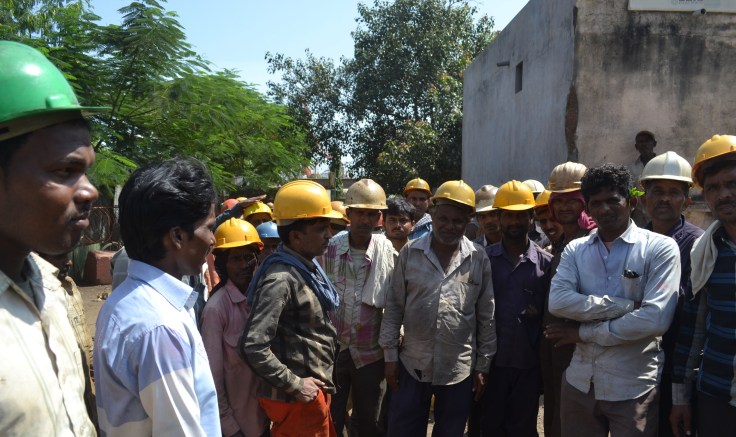
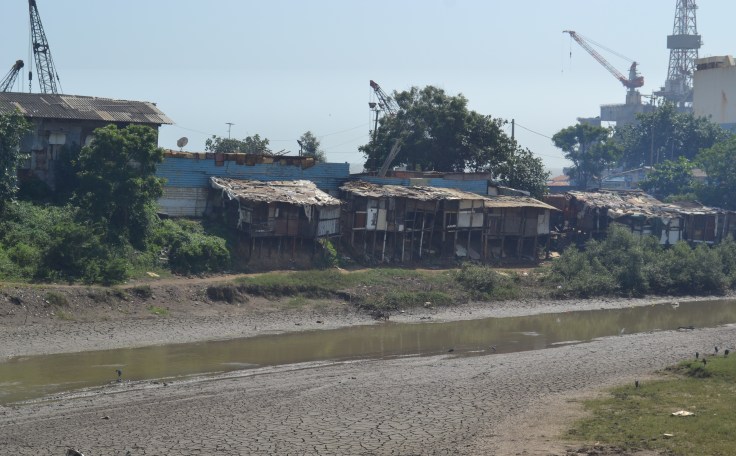
Ramnath is a young 32 years old worker at one of the ship-breaking units at Alang-Sosiya, Asia’s largest ship-breaking yard. He spoke to me his heart out when I met him while he was coming back to restart his work after one hour hurried lunch break. He comes from Jharkhand, a state, which is located some 2000 kilometers away from this Gujarat coast. He says that almost 80 to 90 % of workers here are from Jharkhand, Bihar and Orissa. All these three states are neighbouring states and have very poor employability condition. Ramnath, like most of the workers gets Rupee 300 a day for working eight hours and additional Rupee 150 for working overtime. He is able to earn around 9000 to 10,000 rupees a months out of which he saves 4000 to send it back to his family staying in his village. He even took me to his tin shed where many workers live. It was a long row of very small rooms with very unhygienic condition, and no electricity, drinking water and toilets. Another worker who met me there told me that they have to travel to the sea coast for defecation in open and the drinking water is supplied to them every morning through a water tanker and also from hand pumps which are fixed away from the coast.
Reaching Alang-Sosiya is not very easy. One has to drive almost 225 kilometers from Vadodara to reach this huge coastal ship-breaking yard. Vadodara is very well connected to New Delhi both by air and train. The nearest township to Alang-Sosiya is Bhavnagar, which is in fact has also been historically very significant. Bhavnagar has remained an important center of trade ever since the medieval times and was earlier known as Sihor. Alang-Sosiya is some 50 kilometers from this city, and therefore, many of the owners of the ship-breaking yard reside in Bhavnagar. The entire Bhavnagar region is also popularly known as Saurashtra or Kathiawar, and has an average elevation of 24 metres from the sea. The region has a gradual slope towards the Gulf of Khambhat. The slope becomes all the more sharp near the coast of Alang and Sosiya. It is here in these twin villages that the ship-breaking industry has grown recklessly over the last three decades.
Historically speaking, the region was famous for ship-building and trading activities because of the strong current and elevated coast. This long tradition might have been one of the factors behind the emergence of ship-breaking industry in Alang-Sosiya. One of the owners of ship breaking yard told me that the natural slope of Alang and Sosiya are actually very appropriate for the huge ships anchored on the coast. All the ships are normally engineered in such a way from the front that they get 150 angle on the base what is known as the approach angle. This approach angle is one of the most critical elements to give the huge ships coming from the cold climates a proper docking capability. Nikhil Vyas, a safety officer at Gujarat Maritime Board at Alang told me that most of the ships have 150 angle at the nose base. In fact, berthing at greater or less than 150 is difficult to pull when the ships travel in cold climates and the ship is required to break through the ice at the dockyards (Gregory Tsinker, Marine Structures Engineering: Specialized Applications, Dordrecht: Springer Science, 1995). The other natural advantage of Alang-Sosiya is that unlike most of the sea coasts where sand or rock is found, it has soft mud which allows the ships to be docked easily during the high tide. At the high tide the sea water goes up by 10 meters at Alang-Sosiya thus providing most suitable condition for placing the ship in the yard. And added to all this is the very strong water current at the Gulf of Khmbat.
Before a ship coming from different locations of the world are allowed to be anchored at Alang-Sosiya yards a lot of official formalities are to be done from self declaration by ship owners about last good carried and last travel destination etc. to permission from Gujarat Maritime Board, Commissioner of Customs and Gujarat Pollution Control Board.
The workers do not know that the government gets a huge amount of revenue from these ship breaking yards, and it is the state’s responsibility as well to ensure that the ship-breaking owners provide them with basic amenities. I could find only one Red Cross Hospital in Alang-Sosiya which was 25 bedded. Another worker, Ashok Paswan, who hails from Bihar told me that doctors visit the site once a month and just check their body if they have any red rashes. For any daily problem they have to go the local quacks who are traditional medical practitioners. Red Cross Hospital is so crowded, being the only hospital in the region, that the workers prefer to spend their own money for any health problem. In the afternnon I heard a loud siren, which was that of an ambulance. One of the workers had got injured and was being carried to Bhavnagar for treatment, which is almost one hour drive from Alang. The workers gathered there told me that such incidents are quite normal here and the solitary hospital of Alang is not equipped to handle grave injury cases.
After meeting one of the health workers at Alang I got revealing information. Most of the workers live here without their families and therefore many of them spend their evening drinking locally made liquor and going to sex workers. So few cases of AIDS are not exceptional.
There were one hundred and sixty one plots of ship-breaking in the entire stretch of six kilometers. Each site has an average of 500 workers and so the total number of workers in Alang-Sosiya could be anything over 75000. Most of the shipyards had two or more ships lined up to be broken from the nose side. The custom department although ensures that no hazardous waste is disposed off here but I could observe from a distance at one of the shipyards that a thick layer of white asbestos being removed from the iron layer of a huge ship. During my interview with a worker I showed him the asbestos being removed and asked him whether he knows the ill effects of prolonged inhalation of this dust. He was completely unaware of the after effects although he crudely knew that this material is used in the ships for insulation. One of the officers at the Maritime Board told me that normally the asbestos is packed in a plastic case and disposed off on a truck.
While coming back to Bhavnagar for overnight stay I could see a large number of shops on both sides selling the removed items of the ship. Dr. Dilip Kataria, an Assistant Professor at M.S.University, Vadodara told me that these shops have huge business and people from far off area come here to buy goods and furniture of the ship. These goods and furniture provide a huge profit to the ship-breaking industry owners who procure 40-50 years old ships by paying huge price. In nutshell the ship-breaking industry of Alang-Sosiya is the best case study to understand global waste economy. Ship-breaking has moved from China and South-east Asian nations to India as it provides huge profit to the ship-breaking units owners. The natural condition for setting up of such industry does play a big role, but to the government it is the provider of employment to a large population of the unskilled workers and shop owners.
After the Coronavirus outbreak and the subsequent lockdown announced by the government, these workers headed back to their villages in Bihar and Jharkhand in huge number. That was the right move by them. Otherwise, even a single Covid case would have spread very quickly here given the kind of close proximity the workers live here. They would be returning back to work very soon, but it is essential that the living condition in this huge coastal area is improved. They live in shanties without electricity and toilets, and go for open defacation, despite the fact that they are the source of huge revenue for the Gujarat state. Alang-Sosiya needs Swachh Bharat mission more than Delhi, Mumbai and the likes.
[Total Words: 1400]
 Speaking History
Leave a comment