
Vipul Singh
Stepwells are early medieval, multi-tiered water storage structures built to conserve rainwater in the arid regions of Rajasthan, Gujarat, and Delhi, functioning as both reservoirs and cool community spaces. Their architectural brilliance showcases early ingenuity in climate adaptation and sustainable water management.
Stepwells: A Climate Change Adaptation Strategy from the Past
Stepwells, also known as baolis, are ancient structures from the early medieval period that can be seen as an early adaptation to climate change challenges, particularly concerning water scarcity and temperature regulation. These structures, prevalent in regions like Gujarat and Rajasthan, served multiple purposes that align with modern strategies for adapting to and mitigating climate change impacts.
Baolis were designed with climate sensitivity in mind. They collected and stored rainwater, providing a reliable water source in arid and semi-arid regions. During droughts, they served as essential reservoirs, helping communities cope with water shortages and seasonal fluctuations in water availability.
The design of baolis allowed water to seep into the ground, replenishing local aquifers. This process helped maintain groundwater levels, which is crucial in areas with limited rainfall. Therefore, these structures represent an early effort in groundwater management. Additionally, the architectural design of baolis created cooler microclimates around them. Descending into the stepwell provided relief from hot temperatures, and the evaporation of stored water helped cool the surrounding area—an ancient form of passive cooling.
Baolis were often built as community spaces where people gathered for social and religious functions, fostering community resilience during challenging times, such as droughts.
In these ways, baolis demonstrate how early societies utilized architectural innovation to adapt to their environment. They serve as a precursor to contemporary sustainable infrastructure and exemplify how traditional knowledge can inspire modern climate adaptation strategies.
Baolis, or stepwells, in medieval India were not only functional water storage solutions but also held deep spiritual and religious significance. Their association with religious functions was rooted in cultural beliefs, practical utility, and the symbolic importance of water. Here’s why and how religious functions became intertwined with these structures:
In Indian spiritual beliefs, water has long been revered as a purifying and sacred element. Rivers, wells, and other water bodies are often associated with deities or spiritual power. As sources of water, baolis naturally became sites for rituals, offerings, and prayers, with many being consecrated to specific gods or goddesses.
Like rivers, baolis were often used for ritual purification. People would descend into the baoli to take a bath before participating in religious ceremonies, mirroring the cleansing rituals performed in rivers. This practice made baolis focal points for pilgrimage and religious gatherings, especially in arid regions where rivers were less accessible.
Many baolis were built or sponsored by wealthy patrons or rulers who often dedicated them to a deity. These dedications were accompanied by carvings and inscriptions depicting gods, goddesses, and sacred motifs, reinforcing the idea of stepwells as religious spaces. The belief was that these dedications would bring blessings to the community.
Baolis often served as community hubs, where people gathered not only to collect water but also to celebrate religious festivals and conduct prayers. Given their spacious and cool environment, baolis were suitable for large gatherings and could host festivals such as Holi or local deity worship ceremonies. They provided both a spiritual and social function.
People believed that maintaining and respecting these sacred spaces brought divine protection to their communities. In a sense, this belief added a spiritual duty to the physical upkeep of the baolis, intertwining daily water needs with religious obligations and reverence.
By integrating religious functions into the lives of baolis, medieval societies preserved these structures as sacred spaces. This fostered a deeper communal connection to water resources, spiritual well-being, and environmental stewardship.
Chand Baoli
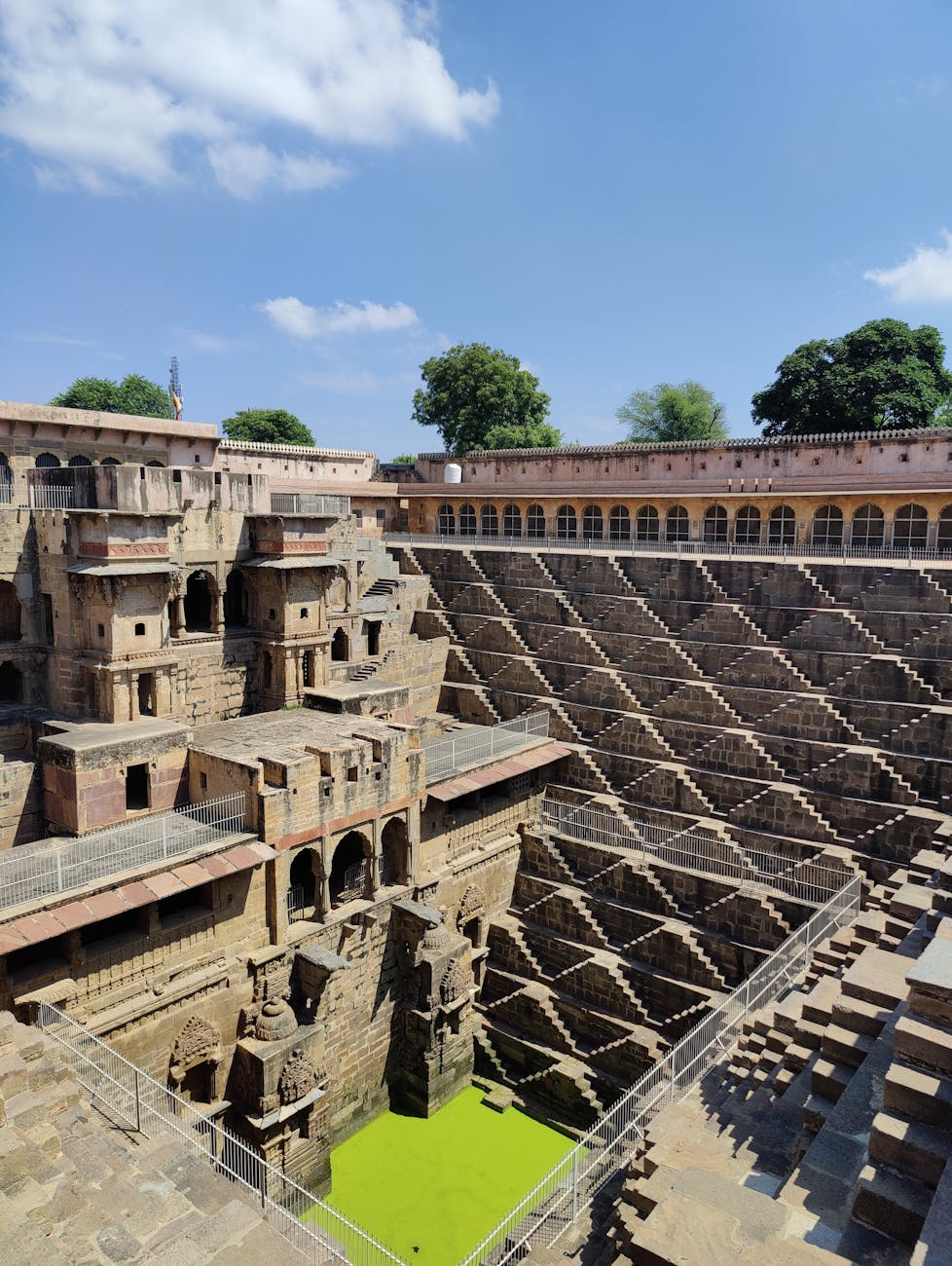
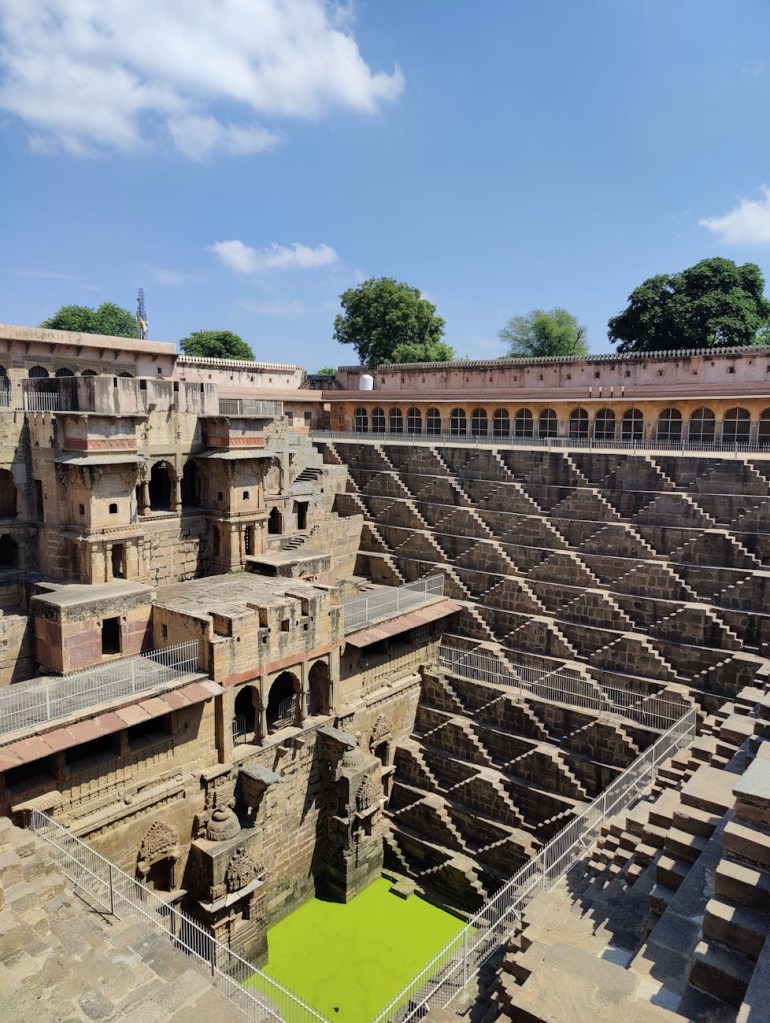
Chand Baoli, located in Abhaneri near Dausa in Rajasthan, is one of India’s most iconic and elaborate stepwells. It encapsulates both the practical and spiritual roles that baolis played in medieval society. Built during the 8th-9th centuries by King Chanda of the Chauhan dynasty, Chand Baoli exemplifies how stepwells became central to daily life, especially in arid regions.
Rajasthan’s arid climate, characterized by extreme heat and sparse rainfall, necessitated water storage and conservation. Chand Baoli, with its 3,500 symmetrical steps descending 13 stories, was constructed to harness rainwater, ensuring access to water even during dry seasons. The deep structure created a naturally cool environment, providing relief from the region’s intense heat. The lower levels maintained a constant, cooler temperature, making Chand Baoli a crucial resource not only for water but also for passive cooling—an innovative climate adaptation strategy long before the concept existed.
Beyond its utilitarian purpose, Chand Baoli was also a place of worship and reverence. Adjacent to the baoli is the Harshat Mata temple, dedicated to the goddess of joy and happiness. This proximity underscores the interconnectedness of water and spirituality, with the baoli serving both as a source of life-sustaining water and as a sacred site linked to divine blessings. Water collected in the baoli was considered sanctified, and the act of descending into the stepwell was seen as a form of ritual purification, symbolizing a journey into the spiritual depths and emerging cleansed.
Chand Baoli, a large communal structure, naturally suited social and religious gatherings. Its architecture, with spacious platforms and cool spaces, allowed it to function as a gathering place for religious festivals, rituals, and news sharing. Festivals and ceremonies dedicated to Harshat Mata were likely celebrated here, further embedding Chand Baoli within the spiritual and social life of the community. The stepwell played a role akin to a temple courtyard, reinforcing communal and religious identities.
Preserving a structure like Chand Baoli was seen as both practical and spiritual. The people of Dausa believed that the baoli’s preservation was essential not only for their physical survival but also for maintaining favor with the divine. This belief in the baoli’s sacredness likely inspired greater community investment in its upkeep, symbolizing a reciprocal relationship between people, nature, and the divine.
Agrasen ki Baoli
Agrasen ki Baoli, like many traditional stepwells, was constructed as a response to the climate conditions and water scarcity challenges prevalent in Delhi during the early medieval period. It also served as both practical and resilient solutions to manage water needs, especially in semi-arid and arid regions where seasonal monsoons were the primary source of water.
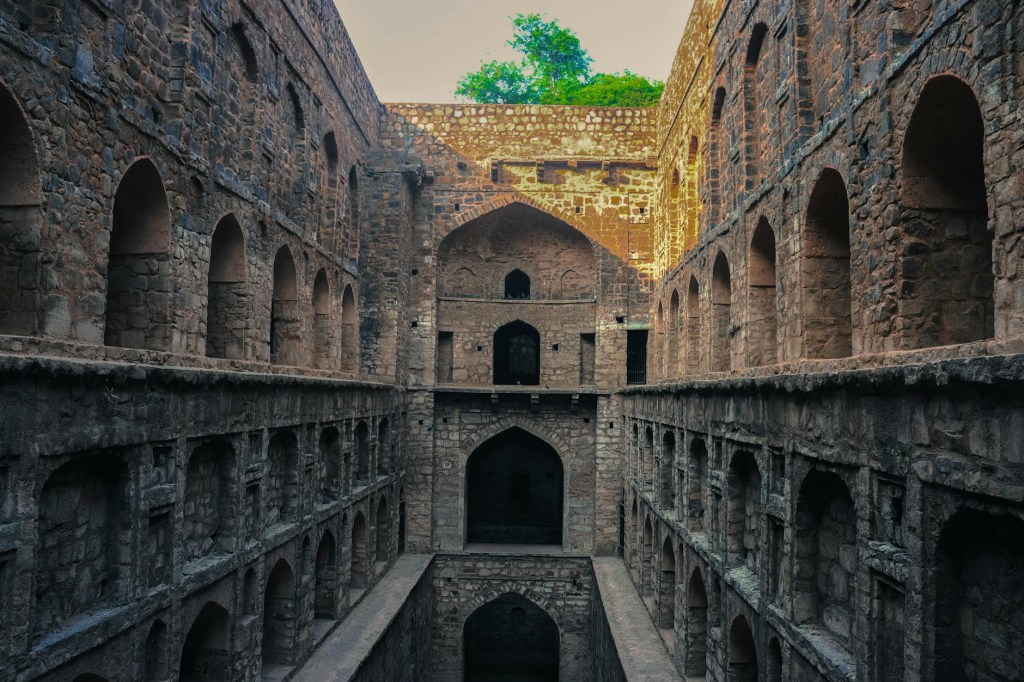
Given the reliance on seasonal rains, Agrasen ki Baoli was designed to capture and store rainwater during the monsoon season, creating a reserve for the dry months. Its depth and layered structure enabled it to hold a substantial amount of water, ensuring the community’s sustenance throughout the year.
Stepwells like Agrasen ki Baoli naturally facilitated groundwater recharge. The stored water would gradually seep through the well’s walls, percolating into the ground and replenishing the aquifer, thereby maintaining groundwater levels and ensuring water availability even during droughts.
The deep, tiered structure of the baoli was ingeniously designed to keep water cool and protected from evaporation under Delhi’s arid climate. The temperature within the stepwell was often significantly lower than outside, providing a refuge during intense heatwaves.
Beyond its role as a water reservoir, the baoli offered a shaded and cool space where individuals could gather, rest, and socialize during the scorching summers.
Agrasen ki Baoli was constructed using locally sourced stones, which are highly durable and capable of withstanding Delhi’s arid climate. The materials chosen were selected to withstand erosion, ensuring the baoli’s resilience over centuries.
The stepwell’s unique layered structure, with steps leading down to the water level, facilitated easy access as the water level fluctuated. This adaptive feature made it usable year-round, regardless of water availability or scarcity.
During heavy rainfall, the baoli would fill up, establishing a sustainable cycle where water could be stored and drawn upon gradually. The design ensured efficient rainwater harvesting, maximizing the capture of a scarce resource in a hot and arid climate.
By capturing excess monsoon rains, stepwells like Agrasen ki Baoli also contributed to reducing runoff and preventing local flooding, thereby fostering a more stable and self-sustaining urban environment.
Agrasen ki Baoli serves as a testament to how early communities adapted to climate challenges with limited technological resources. Its design incorporated sustainable water management practices that modern urban spaces can draw inspiration from, particularly as climate change exacerbates water scarcity and extreme weather patterns worldwide.
Stepwells in early medieval India thus embodied the harmonious blend of utility and spirituality. They were not only architectural marvels but also enduring symbols of communal resilience, environmental wisdom, and cultural heritage.
 Speaking History
Leave a comment