

Communication Technology through the Ages
Varnika Vasundhrae Singh
VIT Vellore
Linkedin: linkedin.com/in/varnika-vasundhrae-singh-a183231a8
ABSTRACT: Recent data suggest that in 2020 approximately 67 percent population of the globe are using mobile phones, numbering 5.24 billion. Starting from operating our home appliances remotely to switching on car engines while sitting at home, we have become dependent on it in every possible way. Mobile phones today is technologically very advanced and compact, but its journey has been very long.
The mobile phones that are there in our pockets right now are a huge part of our lives. Recent data suggest that in 2020 approximately 67 percent population of the globe are using mobile phones, numbering 5.24 billion. Starting from operating our home appliances remotely to switching on car engines while sitting at home, we have become dependent on it in every possible way. Mobile phones today is technologically very advanced and compact, but its journey has been very long.
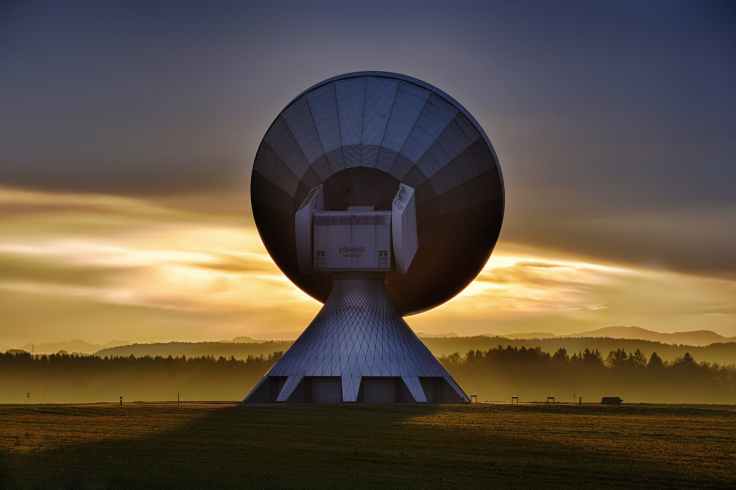
The earliest known communication technology in scientific terms was microwave. Microwave was first produced by Heinrich Rudolf Hertz in 1886. They have small wavelength which allows conveniently-sized antennas to direct them in narrow beams. These beams can be pointed directly at the receiving antenna. Use of microwave has many advantages. They do not allow nearby microwave to interfere with each other even when they are using the same frequencies. Also microwave has a bandwidth 30 times as that of all the rest of the radio spectrum below it. With all the advantages there comes a huge disadvantage also. They cannot pass around hills or mountains as lower frequency radio can due to their line of sight propagation requirement.
Microwaves weren’t brought to practical use until the invention of generators such as Magnetron in 1910. Magnetron was invented by H. Gerdien. It is a high power diode vacuum tube that generates microwaves using interaction of a stream of electrons with a magnetic field while moving past a series of open metal cavities using direct current. They are capable of generating extremely high frequencies and also short bursts of very high power. They are a crucial source of power in microwave ovens and in radar systems.
Later Klystron was invented in in 1937 by American Electrical Engineers Russell and Sigurd. It is a specialized linear beam vacuum tube which is used to amplify microwave by controlling the speed of stream of electrons which were originally accelerated to high velocity by potential of several hundred volts. Microwaves are used in ultrahigh-frequency (UHF) circuits which are used in UHF Television transmission. It is also used for microwave radar sources where oscillations up to 400 gHz in short microwave range are produced.
About 36000 km above Earth a system of synchronous satellites is used for international broadband of all kinds of communications such as television and telephone. This is called point to point satellite communication. High-speed data transmissions between stations on Earth and also between ground-based stations and satellites and space probes take place because of microwave as it is the principle carrier.
The development of radar in World War II in 1939 provided the technology for practical exploitation of microwave communication. Few years later transcontinental relay networks which consisted of chains of repeater stations linked by line-of-sight beams of microwaves were built in Europe and America to relay long distance telephone traffic and television programs between cities.
Before the invention of electromagnetic telephones, tin can telephones were invented. They did not work on modulated electric current but were connected by two diaphragms with a taut string or wire, which transmits sound by mechanical vibrations from one to the other along the wire. They were invented to transmit speech to a distance greater than that of normal speech.
Alexander Graham Bell was the first to patent the telephone as an apparatus for transmitting the vocal or other sounds telegraphically. The telephone emerged from the making and successive improvement of the electrical telegraph. The main idea was to find a way to turn electricity to sound. Early telephones were locally powered by a dynamic transmitter. The battery had to be inspected time to time. It had only one wire for transmitting and receiving of audio, and used a ground return path. They also had only one opening for sound and the user heard and spoke in the same into the same hole. To make this more convenient people started using it in pairs but it was more expensive. One wire was used for each of the function. Telephones connected to the earliest Strowger automatic exchanges had seven wires, one for each telegraph key, one for the bell, one for the knife switch, one for the push button and two for speaking.
Rural and other telephones had hand cranked “magneto” generators to supply an alternating current to ring the bells of other telephones on the line and to alert the exchange operator that were not on common battery exchange.
At the time, telephone technology was based on vacuum tubes, which were mostly modified light bulbs that controlled electron flow, allowing for current to be amplified. But vacuum tubes were not very reliable as they consumed too much power and produced too much heat.
Edison invented and developed the carbon microphone utilised in all telephones along with Bell receiver until the 1980. Carbon microphone, consisted of two metal plates separated by granules of carbon that changed resistance with pressure of sound waves. A steady direct current is passed between the plates through the granules and results in a modulation of the current due to the varying resistance, creating a varying electric current which reproduces varying pressure of sound wave.
In 1947, a small semiconductor device called transistor was invented which was called point contact transistor. This transistor when connected to a circuit amplified the input signal by eight times in a microphone. It generated very low heat, and was very dependable, making possible a breakthrough in the miniaturization of complex circuitry.
Shockley, the inventor had tested various combinations of p-type and n-type semiconductors under different conditions. He with his partners was hoping to find a configuration that would allow to regulate a large flow of current between two electrodes between a thin layer of semiconductor. They were awarded a Nobel prize in Physics in 1956.
Later on, mobile phones were invented which had a major advantage over telephones as they were wireless. Even though history of mobile phones goes back to 1908 when US patent was issued in Kentucky but it wasn’t until 1940, when engineers working at AT&T developed cells for mobile phone base stations. The first ever mobile phones could only communicate where two-way radios were available. The first mobile phone networks involved one very big powerful base station covering a much wider area instead of relying on base stations with separate cells (and the signal being passed from one cell to another). These early mobile phones are referred to as zero generation mobile phones or 0G.
In 1981 the first 1G network was introduced. It was the first generation of mobile telephony, laying the foundation for the communications revolution that has seen the mobile phone become an integral part of the daily lives of billions of people around the world. Very soon in 1992, 2G came out. 2G GSM kick-started the process of miniaturization, which had ultimately led to powerful, versatile phones that we have in our pockets today.
Currently, mostly used network is 4G LTE which was launched in 2007. 4G is based on the LTE technology (Long Time Evolution). It is an international standard and a complete IP based technology used for data transmission. TeliaSonera was the first telecom operator in the world to launch 4G commercially in 2009. We are about to enter the phase of 5G technology, which would change the face of communication by revolutionising Artificial Intelligence.
Wireless technology has transformed our lives in many different ways. We use our mobile phones to check ticket availability at a Cinema Hall, for banking, for online shopping of groceries and fashion wears, and many other things. It helps in saving the cost of cables for networking in addition to providing the mobility and internet access any time we want. Communication technology in that sense not only makes our lives easier and progressive, but it also works as a propellent to economic growth.
[Total words: 1323]
 Speaking History
Hand set development has really changed the scenario. The Gen Y feels this change.
I liked the way you mixed the historic comic with the scientific versleet.
Cheers !
LikeLike