

Vipul Singh.Speaking Rivers.Flyer
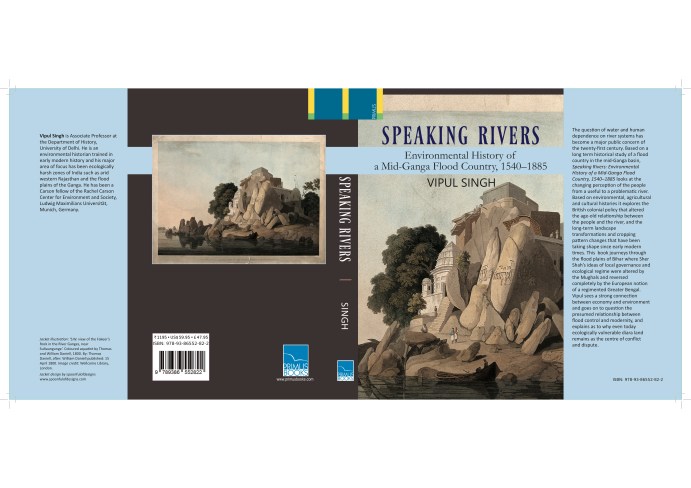 The question of water and human dependence on river system has become one of the major public concerns in this twenty-first century. Speaking Rivers: Environmental History of a Mid-Ganga Flood Country, 1540-1885 does a long-term historical study of Bihar. It comprehends the transformations taking shape in the perception about the rivers such as the Ganga, Sone, Ghaghar, and Kosi from useful rivers under Afghans and Mughals to challenging rivers under colonial rule. The book journeys through the flood plains of Bihar where Sher Shah’s ideas of local governance and ecological regime were altered by the Mughals and reversed completely by the European notion of a regimented Greater Bengal.
Its wide-ranging narrative of relentless calamities tells the story of the famines and brings in river history to the center of the debate in its global context. The book also makes a claim that there is a strong connection between economy and river ecology what its author terms as rivernomics. It questions the presumed relation between flood control and modernity, the misconception of which led British administration to detach land and water into two separate spheres. Drawing on extensive fieldwork and archival records the book also explains as to why even today ecologically vulnerable diara land remains as the center of conflict and dispute. By providing a more textured analysis of how separate identity is formed, it provides the wide spectrum to look at variety of sources from Persian accounts, British records to oral and vernacular sources to write an environmental history.
The book could be useful to undergraduate, postgraduate students and researchers working on environmental history. It will also appeal to river-concerned general readers.
 Speaking History
Leave a comment